










Description
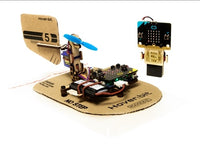
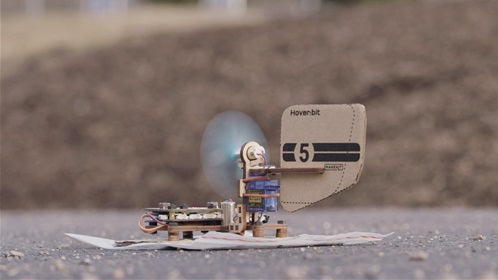
The MakeKit Hover:bit turns a micro:bit into a drifting hovercraft that students build, code and steer themselves. Powerful drone motors lift it on a cushion of air, gliding across the floor at up to 30 km/h — a DIY hovercraft kit where the code is something you can watch, chase across the room and then redesign.
What's included and how it works:
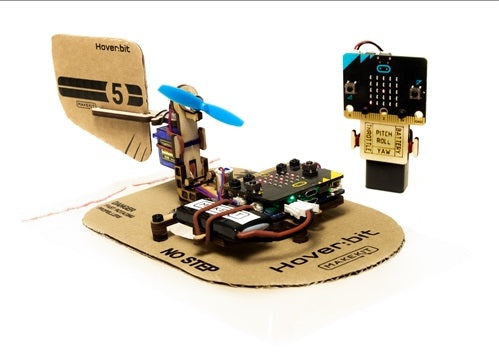
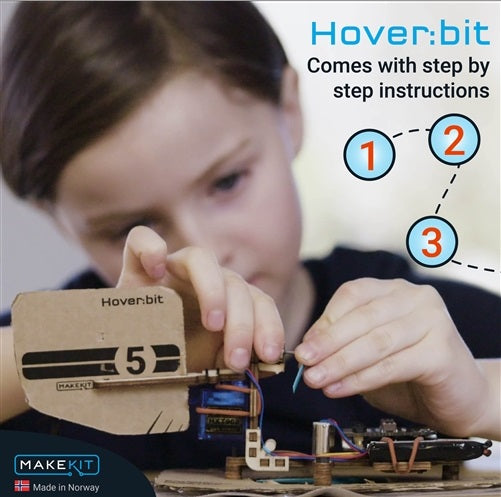
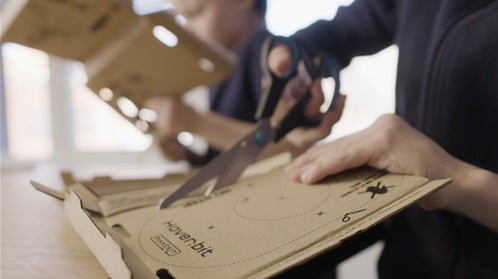
- A micro:bit hovercraft construction kit with a plywood frame plus cardboard parts for the base and rudder, so students can cut and redesign their own craft
- WonderKit control board, rechargeable lithium battery and USB charging; drone motors create the air cushion and a servo steers the rudder
- Code in MakeCode blocks, JavaScript or Python, or load a ready-made program
- Version 2 uses a built-in gyro for traction control and smoother drifting
- Runs indoors or outdoors, and the motors, propellers and control board can be reused in other MakeKit builds
- Suitable from around age 11
- Please note: BBC micro:bits are not included. Two are recommended — one in the craft and one as a handheld controller — which is how the learning program is written. You can also run it on a single micro:bit using the free iPad or Android app
What your students practise:
- Coding and control across three real programming languages
- Electronics, motors and how a hovercraft floats and steers
- Redesigning and rebuilding in cardboard — creativity and engineering
Hover:bit comes with a learning program built around a design challenge, spanning science, arts and crafts, maths and programming. Rechargeable, repairable, and designed and partly made in Norway, it's meant to be crashed, fixed and redesigned again and again.


