




Last Updated: November 10, 2026
Quick Summary
STEAM kits are worth it for Australian curriculum alignment when they map directly to the content descriptions and achievement standards for your year level, not just a general theme. Check each activity against the curriculum codes before you buy, and trial one kit with one year level for a term first.
- Map each kit activity to a specific content description code for your year level.
- Check Science, Digital Technologies and Mathematics separately, as most kits cover only one area.
- Compare coding kits by cost per student per year, not by sticker price alone.
- Watch for hidden costs such as consumables, batteries and setup time each lesson.
- Trial one kit with one year level for a term before committing across the school.
Table of Contents
- What Australian Curriculum Alignment Means for STEAM Kits
- How to Map STEM Kits to Curriculum Outcomes, Step by Step
- Planning STEAM Lesson Plans for Primary School Classrooms
- Assessing Learning with STEAM Assessment Rubrics
- Choosing Coding Kits for Schools That Fit Your Budget and Year Levels
- Trialling Your First Kit in a Single Year Level
- Frequently Asked Questions
What Australian Curriculum Alignment Means for STEAM Kits
STEAM kits for Australian curriculum alignment are classroom resources that link hands-on science, technology, engineering, arts and maths activities to the learning areas teachers must cover.
Alignment is not a yes-or-no label. It means the activities build toward specific content descriptions and achievement standards, which are set out in the Australian Curriculum v9.0 learning areas.
A common mistake is treating "STEM" as a single subject. The Australian Curriculum treats Science, Digital Technologies and Mathematics as separate learning areas, each with its own content.
Watch out: a kit labelled "curriculum aligned" may only cover one strand. Ask the provider which content descriptions the kit addresses before you buy.
How to Map STEM Kits to Curriculum Outcomes, Step by Step
Mapping a kit to curriculum outcomes means matching its activities to the content descriptions for your year level. Here is a simple method that teachers can repeat for any resource.
- List the year level and learning area. Start with one year level and one learning area, such as Year 3 Science.
- Pull the content descriptions. Copy the relevant codes from the curriculum website.
- Map each kit activity. Write the activity next to the code it supports.
- Mark the gaps. Note any codes the kit does not cover.
- Decide what else you need. Plan additional lessons for the gaps.
This takes about an hour for one unit. Repeat it for each term you plan to use the kit.
Matching Content Descriptions and Year Levels
Match codes first, then year levels. Many kits list a recommended age range, but that range is often broad. Check the activities themselves: a building task for Foundation students looks very different from the same task for Year 6.
Key checks:
- Does the activity name the skill students practise?
- Can students complete it at your year level without heavy adult help?
- Does it allow extension for stronger students?
Checking Learning Areas Across Science, Digital Technologies and Mathematics
Most kits sit mainly in one learning area. Check the others before you assume the kit covers them. Science activities may involve forces, materials or energy. Digital Technologies activities may involve coding or algorithms. Mathematics activities may involve measurement, patterns or data.
If a kit covers only one area, that is not a fault. It simply means you will need more resources to cover the rest.
Planning STEAM Lesson Plans for Primary School Classrooms
Primary teachers often find that STEAM lessons work best when they are short, focused and built around one question. Plan each lesson around a single learning intention, then add the kit activity that practises it.
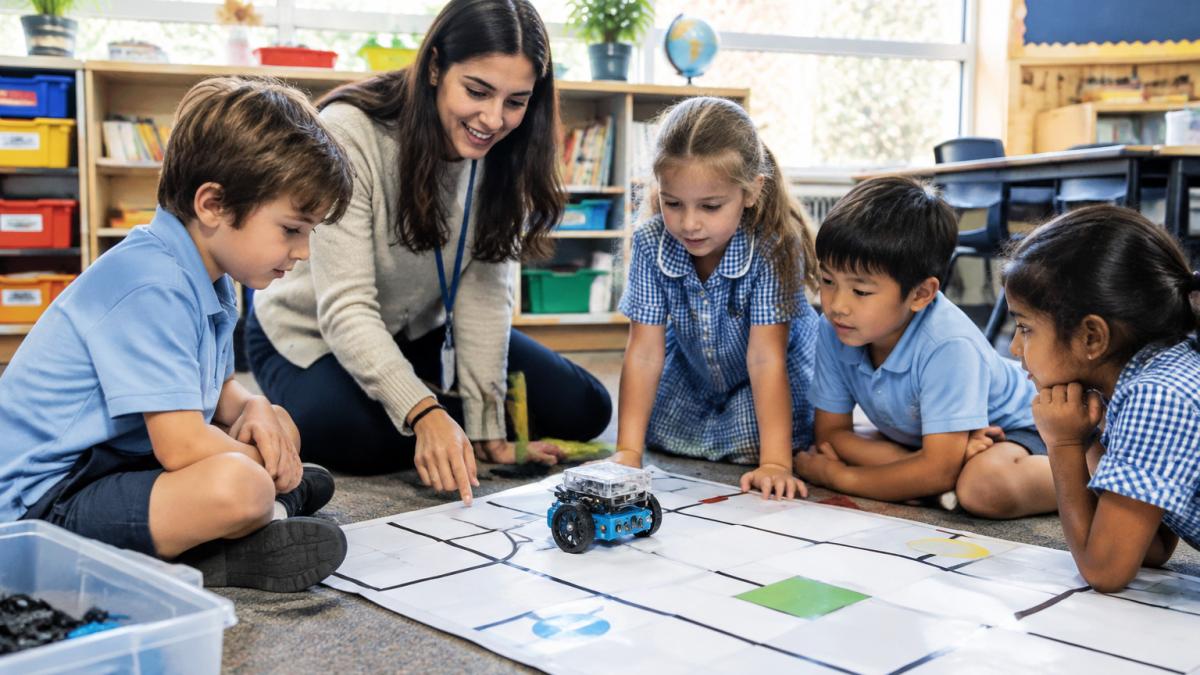
A simple lesson structure works well:
- Warm-up (5 minutes): Ask a question about a familiar object.
- Explore (15 minutes): Students try the kit activity in pairs.
- Share (5 minutes): Students explain what worked and what did not.
- Link (5 minutes): Connect the activity back to the curriculum code.
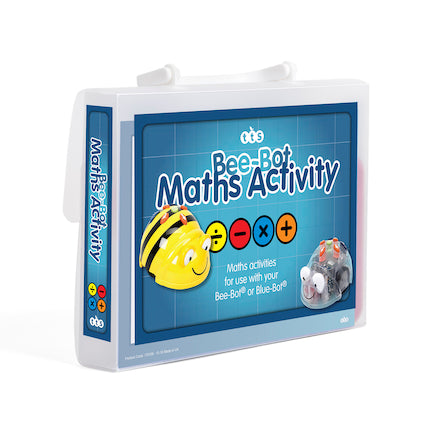
For a classroom-ready option, the Bee-Bot & Blue-Bot Mathematics Activities Pack gives each card a learning intention, an activity and the resources needed, which makes lesson planning faster.
Assessing Learning with STEAM Assessment Rubrics
Assessment is where many STEAM resources fall short. Teachers need evidence that students have learned the content, not just that they enjoyed the activity.
Start by writing one learning intention in plain language, then state the curriculum code it supports. Keeping the curriculum code visible also makes it easier to choose activities that meet the learning intention without stretching the budget, a practical consideration explored by Teaching IRL.
A three-level rubric works well for most primary classes:
- Beginning: The student needs prompts to start, or the solution does not yet match the intention. For a coding task, the student may run the robot once without predicting the path.
- Developing: The student completes the task with occasional support. For a coding task, the student predicts the path for simple sequences and corrects errors when shown where they occurred.
- Secure: The student completes the task independently and can explain the reasoning. For a coding task, the student predicts the path accurately, debugs a fault without help and adapts the sequence for a new target.
Write each level as an observable action, not a feeling. "Explains why the robot turned early" can be seen and recorded. "Understands turning" cannot.
Formative checks should happen during the lesson rather than at the end. Three practical options:
- Pair observation: Walk the room with a short checklist and tick the rubric line for each pair. Ten minutes of focused observation usually gives enough evidence for a group.
- Explain-your-solution prompt: Ask one student in each pair to describe their solution in two sentences. Record the response against the rubric.
- Exit response: Give a short drawn or written prompt at the end of the lesson, such as sketching the route a robot would take to a target. Keep it to two or three questions.
Watch out: a student who completes the activity quickly may still be working at the beginning level if they copied a peer's sequence. Check the explanation as well as the outcome.
Keep the rubric and the evidence together in one place, such as a planning document for the unit.
Choosing Coding Kits for Schools That Fit Your Budget and Year Levels
Coding kits vary widely in price and in how long they last, so comparing sticker prices alone can mislead.
A simple calculation helps. Add the purchase price of the robots, mats and cards. Add the expected annual cost of consumables and replacement parts.
The following factors often change the result more than the purchase price: if you are weighing kits for younger students, see our guide to robotics kits for preschool makerspaces.
- Reusable components: Robots and durable mats are used across many activities. Single-use cards or printed materials need reordering as they wear out.
- Consumables: Check whether the kit needs batteries, markers, paper or other items each term, and whether these are included or must be bought separately.
- Setup time: Some kits need charging, pairing or mat layout before every lesson. A kit that takes ten minutes to set up for a thirty-minute lesson will be used less often.
- Storage: Mats and robots need a dry, secure space. Large floor mats can be difficult to store in a crowded classroom, so consider a shared resource cupboard.
- Class size: A single robot shared between four students gives a different learning experience from one shared between two. Check how many students each device realistically serves, and whether the activities allow pairs or small groups to work without waiting.
Watch out: the cheapest starter set often lacks the cards or mats needed for the topics you actually teach.
The article sets out the main factors that change the true cost of a coding kit, so you can compare options on more than sticker price.
| Factor | What to check | Why it matters |
|---|---|---|
| Reusable components | Robots and durable mats | Used across many activities |
| Consumables | Batteries, markers, paper | May need reordering each term |
| Setup time | Charging, pairing, mat layout | Short lessons may go unused |
| Storage | Dry, secure space | Large mats are hard to store |
| Class size | Students per robot | Affects how much hands-on time each child gets |
Trialling Your First Kit in a Single Year Level
Start small. Trial one kit with one year level for one term before you commit across the school. This shows you whether the activities fit your timetable, your students and your curriculum map.
Track three things during the trial:
- How long each activity takes in practice.
- Which students need extra support.
- Which curriculum codes the kit clearly covers.
At the end of the trial, you will have real evidence to take to your leadership team. A single-class pilot is often the easiest way to show that a resource is worth it.
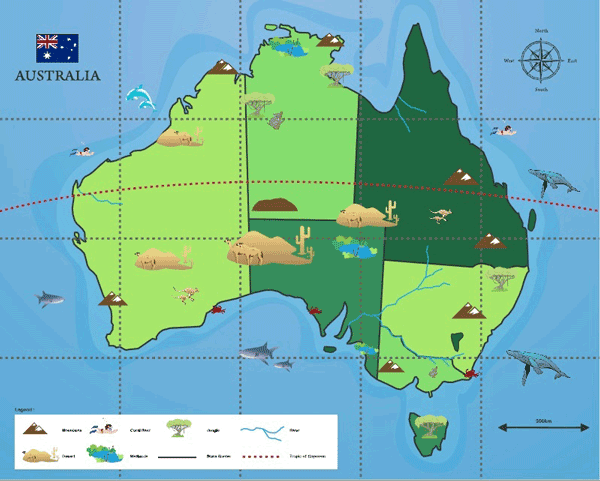
If you are looking for a single robot and mat to begin with, the Bee-Bot & Blue-Bot Australia Map Mat gives a local context for geography and coding at a modest cost of AUD 53.64.
Ready to find kits that match your year levels? Sammat's teacher-run support team can help you choose resources that fit your curriculum and budget.
Frequently Asked Questions
How do you align a STEAM kit with the Australian Curriculum?
Start by identifying the learning area and year level the kit targets, then compare the activity's learning intentions with the relevant content descriptions in the Australian Curriculum. Write down the specific codes each activity addresses so you can show a clear link during planning or a school review. A kit can cover several learning areas at once, so map each lesson rather than relying on the product description. Check that the cognitive demand matches the year level, and adjust the task where needed.
What should teachers look for in a curriculum-aligned STEAM kit?
Look for clear learning intentions linked to specific content descriptions, activity cards that state the year levels they suit, and materials that are reusable across units. Check whether the kit supports the design process, with planning, building, testing and reflecting built in. Solderless, classroom-ready components reduce setup time. Finally, confirm the supplier offers teacher support, since a kit that cannot be explained to colleagues is harder to use consistently across a school.
Which curriculum areas can a STEAM kit connect?
Most STEAM kits connect to Digital Technologies, Science and Mathematics, and many also support English through instructions and reflection, and Design and Technologies through the engineering design process. Coding-based robot mats can link to Mathematics through counting, measurement and directional language, and to Humanities through geography activities. Map each activity to its learning area separately, because a single activity often touches several areas but meets the outcomes of only some of them.
How can coding kits be used in primary school lessons?
Coding kits work well as short, repeated activities that build sequencing, debugging and directional language. Teachers can start with simple floor-robot routes, then progress to multi-step challenges that include loops or conditions as students grow more confident. Pairing students helps with collaboration and communication. Use a small number of robots in rotating groups if budgets are tight, and keep a clear record of which content descriptions each session addresses.
