

KaiBot Hybrid Coding Robot — Ages 5–15
$199.00 ex GST
($218.90 inc GST)
KaiBot is a hybrid coding robot for students aged 5 to 15 — one robot that works completely screen-free, or alongside a tablet or laptop when you're ready for it. Students lay out a sequence of tactile coding cards, KaiBot reads them with its downward-facing camera, and then drives the sequence out on the floor. The logic is visible on the desk before anyone opens an app.
What's included:
1 x KaiBot robot with built-in rechargeable lithium-ion battery
1 x USB charging cable
1 x set of basic coding cards (33 cards) with a durable, water-resistant finish
How it works:
A downward-facing camera reads the coding cards and senses which numbered KaiTile the robot is sitting on
A 1" LCD screen shows the recorded card, the battery level, and the student's emoji when paired with Kainundrum
Four RGB LEDs signal the robot's state and the student's profile colour
A built-in speaker gives audio feedback during activities
The roof is Lego-compatible, so students can build on top of the robot
Connects over Bluetooth and works with iPad, Chromebook, PC and Mac
What students practise:
Sequencing and debugging, before any syntax gets in the way
A clear progression from unplugged cards to Blockly, and then to Python
Cross-curricular work through Literacy Kitchen, Market Math and Kainundrum
The battery is sealed and the shell has no user-serviceable parts inside, so there is nothing loose for students to mislay. Add the optional Autonomous Charging Dock and, once paired with Kainundrum, KaiBot will drive over and charge itself between lessons.
KaiBot Intro Pack — Robot & KaiTiles
$292.60 ex GST
($321.86 inc GST)
The KaiBot Intro Pack pairs the KaiBot coding robot with its first set of magnetic KaiTiles — enough to build simple mazes and start coding on the first day. It suits a single student at home, one station in a classroom, or a teacher who wants to trial KaiBot before committing to a full class set.
What's included:
1 x KaiBot hybrid coding robot, with USB charging cable and 33 basic coding cards
1 x set of magnetic KaiTiles, numbered 1 to 10
Getting started:
Lay the KaiTiles out as a path or a maze — KaiBot senses which numbered tile it is sitting on
Build a program with the coding cards and let KaiBot scan and run it, with no screen involved
Pair with the free Kainundrum Lite app for tutorials, coding modes, projects and a 3D virtual maze
What students practise:
Sequencing, direction and simple debugging
Spatial reasoning through designing their own mazes
An entry point that leads on to Blockly and Python as confidence grows
You will need your own USB power adapter — the pack includes the charging cable but not a wall plug. Everything here works with the rest of the KaiBot range, so extra tiles, advanced card sets and classroom packs added later all fit together.
KaiBot Small Classroom Pack — 5 Robots
$1,432.40 ex GST
($1,575.64 inc GST)
The KaiBot Small Classroom Pack puts five robots and thirty numbered KaiTiles into a room — enough for around 10 students working in small-group rotation. Kai's Education suggests roughly one robot per three students, so this pack also stretches to a larger class if groups take turns at a station.
What's included:
5 x KaiBot robots with charging cables
2 x Advanced Coding Card sets (100 cards each)
1 x Charging Dock
1 x set of Magnetic KaiTiles, numbered 1 to 30
1 x Teacher Guide eBook
Running it in class:
Uniquely numbered tiles can all sit on the same maze layout, so groups can build one large course or several small ones
Advanced cards go well beyond basic movement, covering logic, functions, repeats, conditionals and variables
Robots work screen-free, or paired with Kainundrum on iPad, Chromebook, PC or Mac
What students practise:
Sequencing and debugging as a group, with the code laid out on the desk
Reading and following each other's algorithms
A path from unplugged cards through Blockly to Python
Over sixty CSTA-aligned lesson plans are available free from Kai's Education with an account. Purchase orders welcome from Australian schools.
KaiBot Medium Classroom Pack — 10 Robots
$3,114.34 ex GST
($3,425.77 inc GST)
The KaiBot Medium Classroom Pack carries ten robots and fifty numbered KaiTiles — enough for a class of around 20 students working in pairs, with tiles to spare for larger maze layouts. It adds a charging station, so a full set can be powered up overnight from one point rather than ten separate cables.
What's included:
10 x KaiBot robots with charging cables
1 x Charging Station and 1 x Charging Dock
5 x Advanced Coding Card sets (100 cards each)
1 x set of Magnetic KaiTiles, numbered 1 to 50
1 x Teacher Guide eBook
Running it in class:
Five card sets means five groups can code independently rather than queueing for one deck
Fifty uniquely numbered tiles can form one large maze or several smaller ones at once
Robots can run screen-free, or paired with Kainundrum on iPad, Chromebook, PC or Mac
What students practise:
Movement, logic, functions, repeats, conditionals and variables through the advanced cards
Collaboration and turn-taking in group rotations
A progression from unplugged cards through Blockly to Python
Over sixty CSTA-aligned lesson plans are available free from Kai's Education with an account. Purchase orders welcome from Australian schools.
KaiBot Large Classroom Pack — 15 Robots
$4,795.92 ex GST
($5,275.51 inc GST)
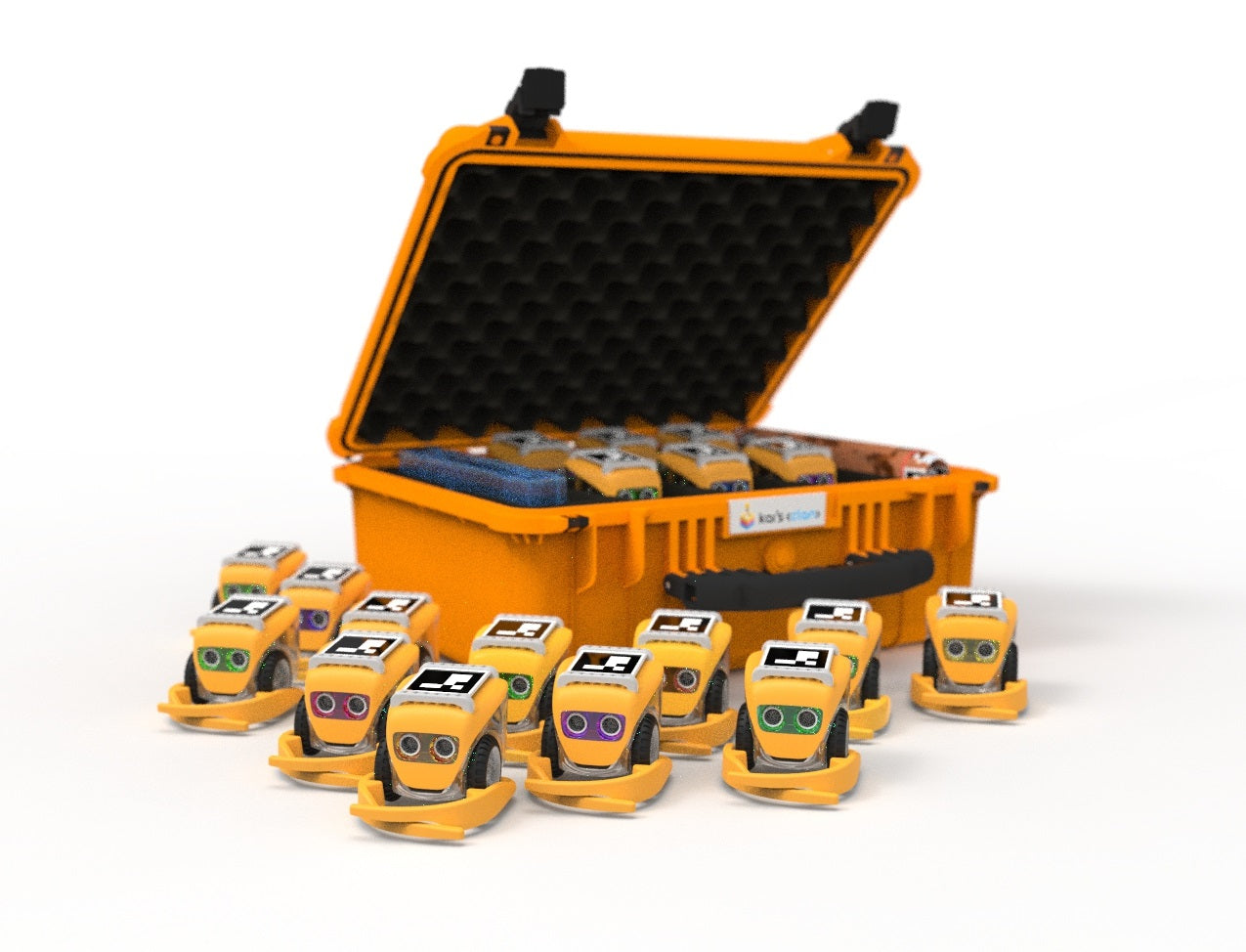
The KaiBot Large Classroom Pack is the full-class option — fifteen robots, sixty numbered KaiTiles and a student eBook for every child, sized for around 30 students working in pairs. It is the pack for a school committing to coding across a whole year level rather than trialling it in one room.
What's included:
15 x KaiBot robots with charging cables
7 x Advanced Coding Card sets (100 cards each)
1 x Charging Station and 1 x Charging Dock
2 x sets of Magnetic KaiTiles 1–30, plus 1 x set of KaiTiles 31–60
1 x Teacher Guide eBook
15 x Student Activity eBooks
Why the tile count matters:
Sixty uniquely numbered tiles let several groups build separate mazes at once, or one very large shared layout
Duplicate 1–30 sets mean two groups can run identical challenges side by side and compare solutions
Advanced cards cover movement, logic, functions, repeats, conditionals and variables
What students practise:
Collaborative problem-solving across parallel groups
Progression from screen-free cards through Blockly to Python
Independent work, with an activity eBook each rather than a shared handout
Sixty-plus CSTA-aligned lesson plans are available free from Kai's Education with an account. Purchase orders welcome from Australian schools.
KaiLab Start Pack — 4 Robots
$1,532.30 ex GST
($1,685.53 inc GST)
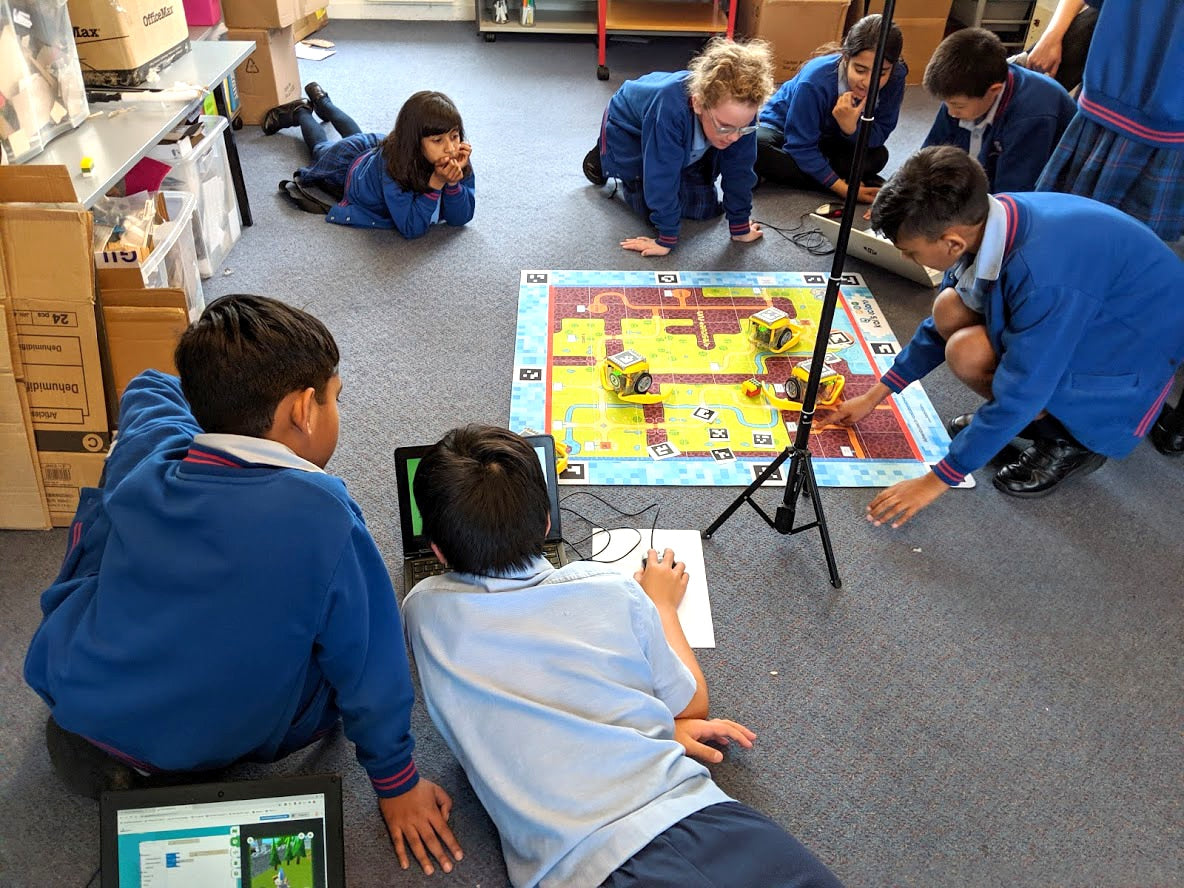
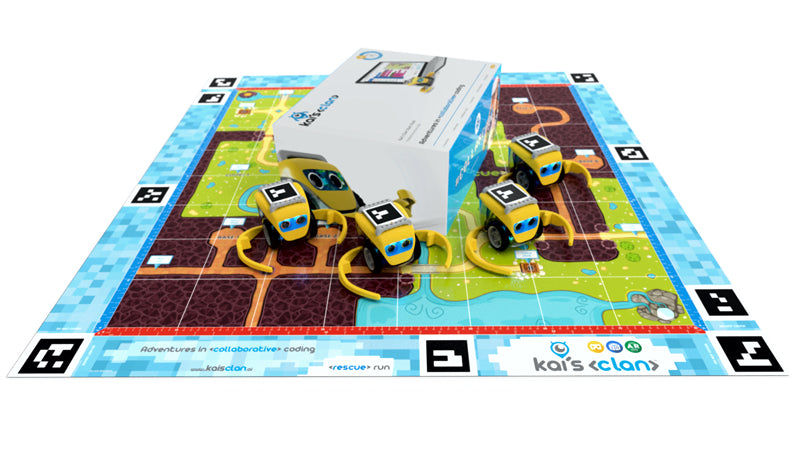
The KaiLab Start Pack is the entry point to the platform — four robots, an adventure mat and everything needed to run collaborative AR/VR coding lessons for Years 5 to 10. Students code physical robots in a browser and watch their work mirrored in a 3D virtual world at the same time.
What's included:
4 x KaiLab robots
1 x Rescue Run AR/VR adventure mat
1 x tripod with phone holder
1 x sensor box of IoT KaiBits
Coding cards and spare parts boxes
1 x Kai's Eye app licence
Education lesson plans
How it works:
Coding happens in a browser using Blockly or Python — no software to install
A phone or tablet mounted on the tripod tracks each robot's QR code and position on the mat
Robot positions and sensor readings sync to the cloud about once a second, so everyone sees live updates
The same scenario can be viewed in 3D, in augmented reality, or in VR on a headset
What students practise:
Collaborative problem-solving — several students working in one shared environment at once
Reading and acting on live IoT sensor data
Blockly first, then Python, without changing platforms
Suits a small group, a club, or a class working in rotation. Purchase orders welcome from Australian schools.
KaiLab Classroom Pack — 12 Robots
$3,773.00 ex GST
($4,150.30 inc GST)
The KaiLab Classroom Pack is the full-class option — twelve robots, two adventure mats and a large sensor set, built so an entire Year 5 to 10 class can code together on a shared problem rather than rotating through one station.
What's included:
12 x KaiLab robots
2 x tripods with phone holders
1 x Mars Discovery AR/VR adventure mat and 1 x Automated Warehouse AR/VR adventure mat
1 x large sensor box containing 28 IoT KaiBits
Coding cards and spare parts boxes
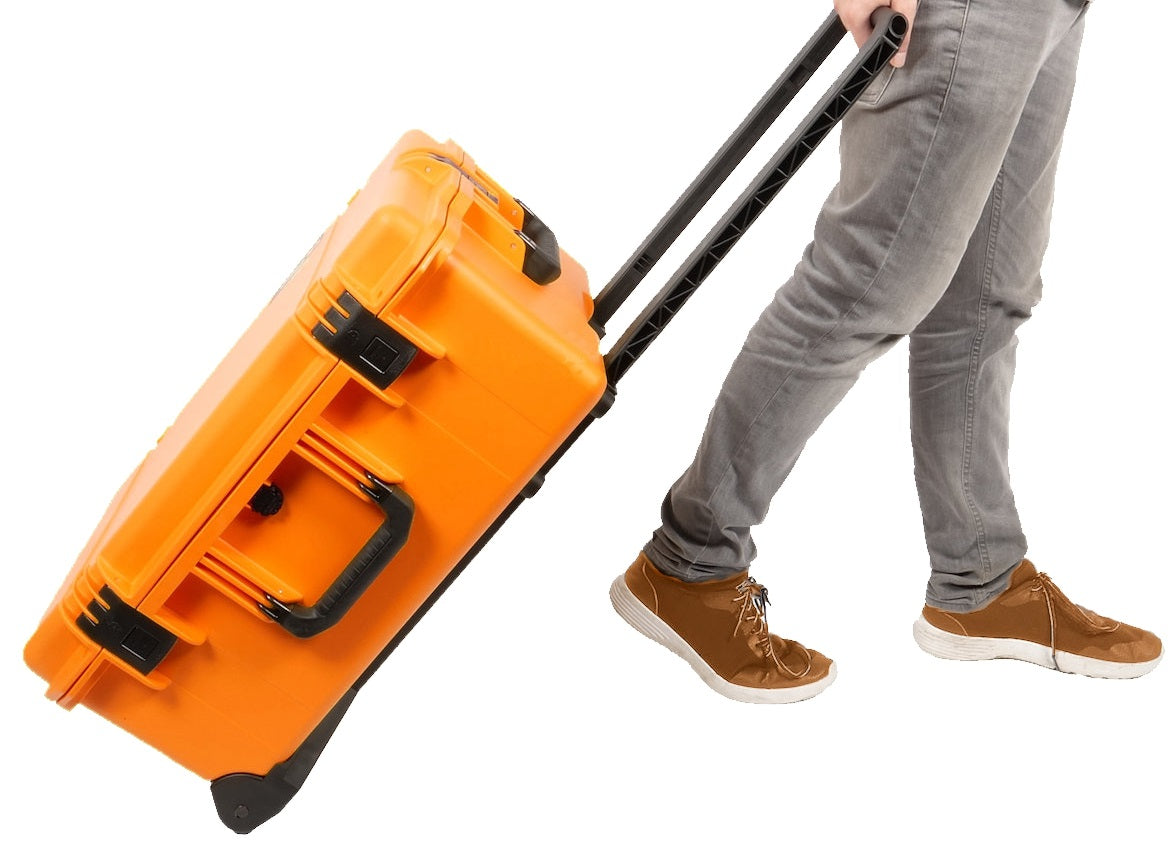
1 x IP67 waterproof protective case with wheels
2 x Kai's Eye app licences
Education lesson plans
How it works in a classroom:
Students code in Blockly or Python through a browser — laptops, Chromebooks and tablets all work
A phone or tablet on the tripod tracks each robot's position and syncs it to the virtual environment
Everything the class codes appears in a 3D digital twin, viewable in augmented and virtual reality
Two mats mean two scenarios can run at once, or one large combined project
What students practise:
Real-time collaboration — several students working in one shared environment
Collecting and interpreting live IoT sensor data
Progression from Blockly to Python within the same platform
The wheeled IP67 case matters more than it sounds: twelve robots, two mats and a sensor box is a lot to move between rooms. Purchase orders welcome from Australian schools.
KaiLab Super-size Rescue Run Mat — 1.6m
$915.00 ex GST
($1,006.50 inc GST)
The super-size Rescue Run mat is the 1.6 m version of the tower-defence styled adventure mat — 2.56 square metres, roughly two and a half times the area of the standard 1 m mat.
What's included:
1 x neoprene AR/VR adventure mat, 1.6 m x 1.6 m (2.56 m²)
Rescue Run lesson plans and activities, with 3D, AR and VR content
What makes it work in class:
Game-based challenges that reward computational and scientific thinking under time pressure
A wide selection of coding lessons, or teachers can build their own
Student code is visible in a 3D environment, in augmented reality and in VR
Why the larger size:
More robots in play at once, which is the point of a tower-defence scenario
Longer approach routes, so planning and timing carry real weight
Teams can defend separate zones rather than queueing for one
Durable, easy to clean, and folds away without creasing. Requires KaiLab robots and the Kai's Eye tracking app, sold separately.
KaiLab Super-size Smart City Mat — 1.6m
$915.00 ex GST
($1,006.50 inc GST)
The super-size Smart City mat is the 1.6 m version of the Smart City adventure mat — 2.56 square metres of city-themed grid, roughly two and a half times the area of the standard 1 m mat.
What's included:
1 x neoprene AR/VR adventure mat, 1.6 m x 1.6 m (2.56 m²)
Access to the Smart City 3D, AR and VR environment and lesson plans
The lesson behind it:
Students tackle one question — how will future cities affect the people living in them?
Sensors and IoT data feed decisions about transport, energy and services
Activities run both on the mat and beyond it, connecting coding to real urban problems
Why the larger size:
A city grid gets crowded quickly — more space means more districts and more robots operating at once
Whole-class demonstrations work without students craning over each other
Genuine multi-team scenarios, where groups manage different parts of one city
Durable, easy to clean, and folds away without creasing. Requires KaiLab robots and the Kai's Eye tracking app, sold separately.
KaiLab Super-size Warehouse Mat — 1.6m
$915.00 ex GST
($1,006.50 inc GST)
The super-size Automated Warehouse mat is the 1.6 m version of the logistics-themed adventure mat — 2.56 square metres, roughly two and a half times the area of the standard 1 m mat.
What's included:
1 x neoprene AR/VR adventure mat, 1.6 m x 1.6 m (2.56 m²)
Access to the Automated Warehouse 3D, AR and VR content and lesson plans
The question it asks:
Is buying something really as simple as one click?
Students see what happens behind the scenes in logistics and warehousing
Routing, picking and supply-chain efficiency become coding problems with a visible cost
Why the larger size:
A warehouse floor needs room — more aisles, more picking stations, more robots working simultaneously
Congestion and routing conflicts emerge naturally, which is exactly the lesson
Suits whole-class scenarios where teams run different parts of one operation
Durable, easy to clean, and folds away without creasing. Requires KaiLab robots and the Kai's Eye tracking app, sold separately.
KaiLab Super-size Mars Mat — 1.6m
$915.00 ex GST
($1,006.50 inc GST)
The super-size Mars Discovery mat is the 1.6 m version of the standard adventure mat — 2.56 square metres of Martian surface, roughly two and a half times the area of the 1 m version. It suits a full class working around one shared mission rather than small groups taking turns.
What's included:
1 x neoprene AR/VR adventure mat, 1.6 m x 1.6 m (2.56 m²)
Access to the Mars Discovery 3D, AR and VR content and lesson plans
What students do:
Plan and run missions across a simulated Martian environment
Graph live IoT sensor data from their rovers
Work through risk-factor role play, deciding what a mission can and cannot afford to attempt
Why choose the larger mat:
More robots can operate at once without collisions dominating the lesson
Longer routes make sequencing and efficiency genuinely matter
A whole class can gather around it, rather than rotating through a station
Built for classroom use — durable, easy to clean, and folds away without creasing. Requires KaiLab robots and the Kai's Eye tracking app, sold separately.
KaiLab Water Cycle AR/VR Mat
$762.30 ex GST
($838.53 inc GST)
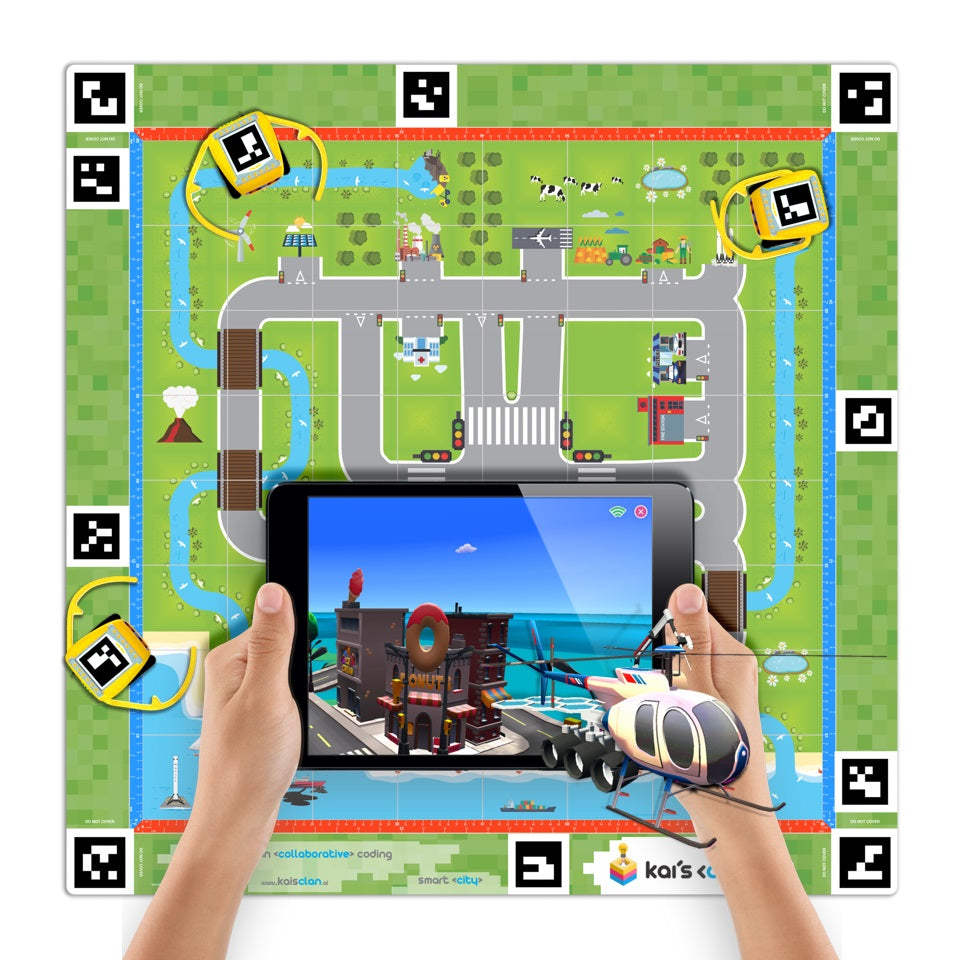
The Water Cycle mat turns an 8x8 grid into a working ecosystem. Students lay out T-junction and L-junction water pipes to build a network that directs supply into different input and output mechanisms — then watch the same system run in the virtual world alongside them.
What's included:
1 x neoprene AR/VR adventure mat, 1 m x 1 m
Access to 3D, AR and VR lesson content and education lesson plans
What students investigate:
How water moves through an ecosystem, and what each part contributes to sustaining it
Network design — planning pipe layouts that actually deliver water where it is needed
Resource management decisions, including preventing pollution downstream
How you can view it:
In 3D through Chrome, Safari or Edge
In augmented reality on a compatible Android or iOS device
In virtual reality on a compatible headset
Built for classroom use — durable, easy to clean, and folds away without creasing. Requires KaiLab robots and the Kai's Eye tracking app, sold separately.
KaiLab Smart City AR/VR Mat
$762.30 ex GST
($838.53 inc GST)
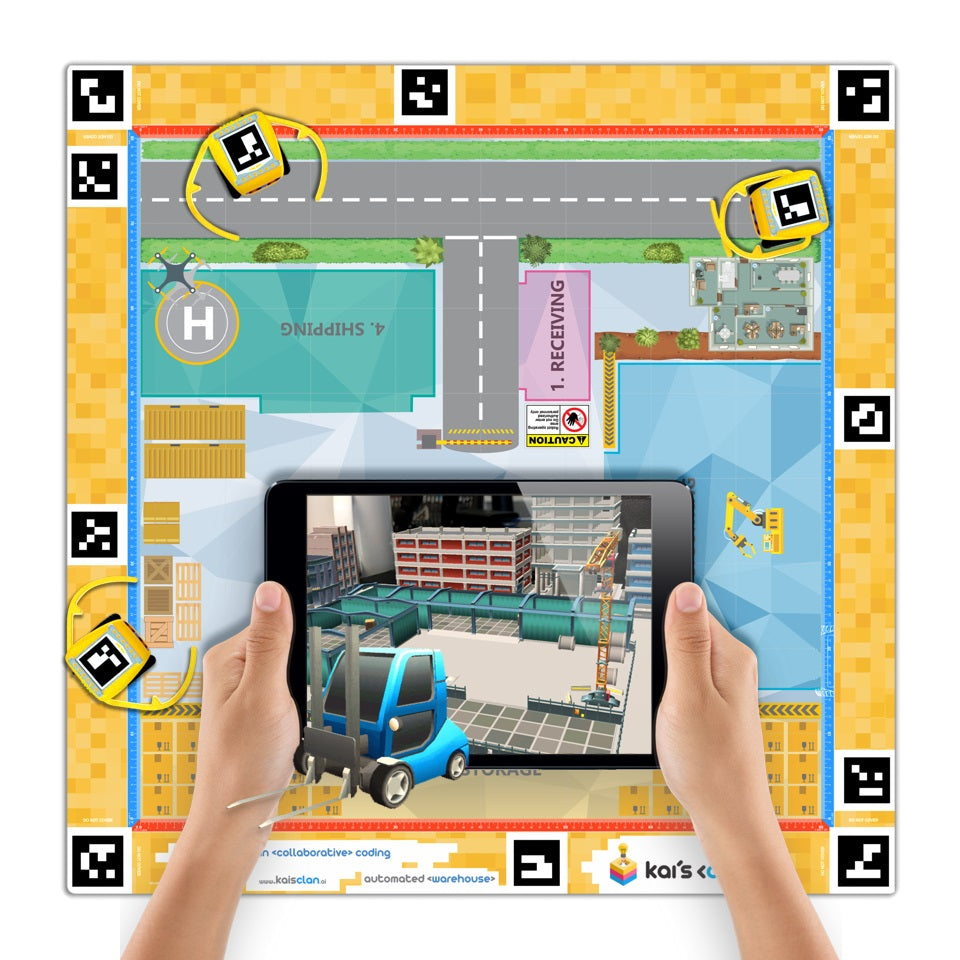
Smart cities need smart people. This mat puts one question in front of a class — what will future cities do to the people who live in them? — and gives them sensors, IoT data and a virtual city to answer it with.
What's included:
1 x neoprene AR/VR adventure mat, 1 m x 1 m
Premium 3D, AR and VR content with education lesson plans
What students work on:
Transport, energy and services in a connected city
Sensor and IoT data feeding real decisions about how the city runs
Both on-mat coding tasks and activities that take the question outside the classroom
How you can view it:
In 3D through Chrome, Safari or Edge
In augmented reality on a compatible Android or iOS device
In virtual reality on a compatible headset
Built for classroom use — durable, easy to clean, and folds away without creasing. Also available as a 1.6 m super-size mat for whole-class work. Requires KaiLab robots and the Kai's Eye tracking app, sold separately.
KaiLab Automated Warehouse AR/VR Mat
$762.30 ex GST
($838.53 inc GST)
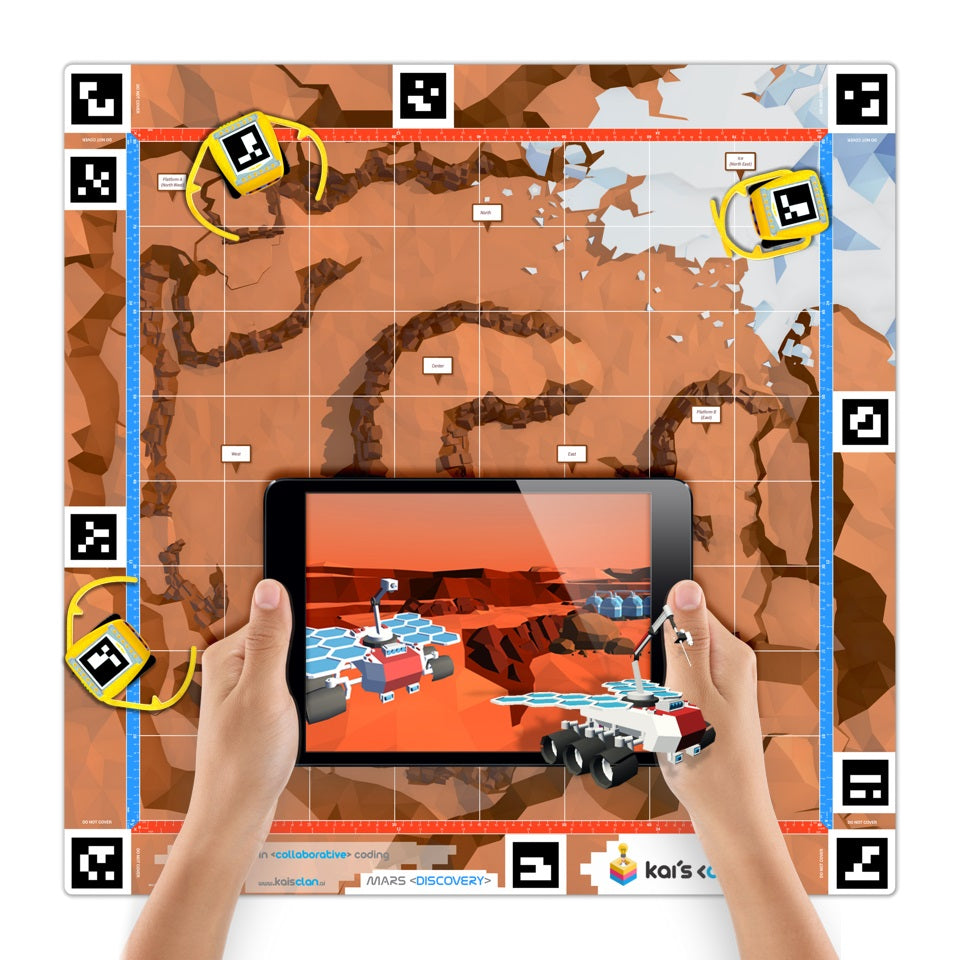
Is buying something really as simple as one click? The Automated Warehouse mat takes students behind the scenes of logistics and warehousing — the part of the supply chain that turns an order into a parcel on a doorstep.
What's included:
1 x neoprene AR/VR adventure mat, 1 m x 1 m
Premium 3D, AR and VR content with education lesson plans
What students work on:
Routing and picking problems, where an inefficient algorithm has a visible cost
How automation actually operates in a working warehouse
Supply chain decisions, and the trade-offs behind fast delivery
How you can view it:
In 3D through Chrome, Safari or Edge
In augmented reality on a compatible Android or iOS device
In virtual reality on a compatible headset
Built for classroom use — durable, easy to clean, and folds away without creasing. This mat is also included in the KaiLab Classroom Pack. Requires KaiLab robots and the Kai's Eye tracking app, sold separately.
KaiLab Mars Discovery AR/VR Mat
$762.30 ex GST
($838.53 inc GST)
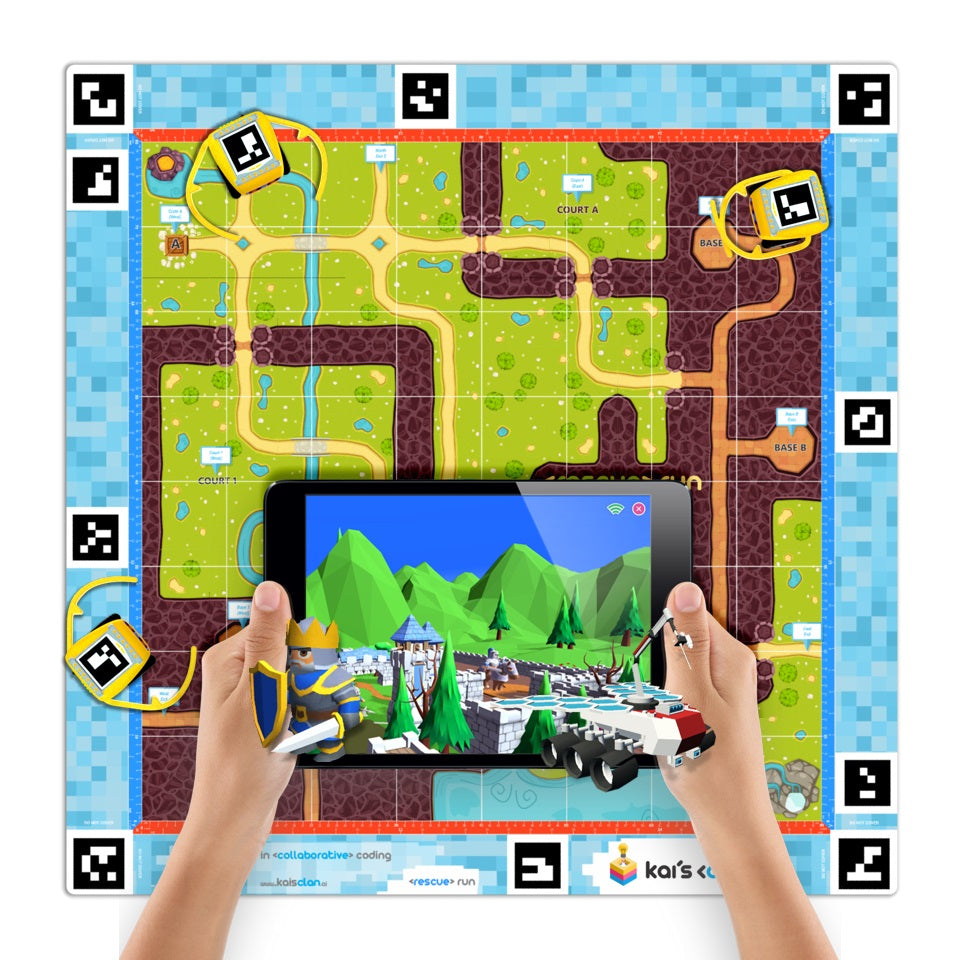
The Mars Discovery mat turns a classroom floor into the surface of Mars. Students plan missions together, simulate the Martian environment and send their rovers across the virtual red planet — with real sensor data driving what they find.
What's included:
1 x neoprene AR/VR adventure mat, 1 m x 1 m
Premium 3D, AR and VR content with education lesson plans
What students work on:
Mission planning as a team, with roles rather than a single coder
Graphing live IoT sensor data collected by their rovers
Risk factor role play — deciding what a mission can afford to attempt
How you can view it:
In 3D through Chrome, Safari or Edge
In augmented reality on a compatible Android or iOS device
In virtual reality on a compatible headset
Built for classroom use — durable, easy to clean, and folds away without creasing. This mat is also included in the KaiLab Classroom Pack, and comes in a 1.6 m super-size version for whole-class work. Requires KaiLab robots and the Kai's Eye tracking app, sold separately.
KaiLab Rescue Run AR/VR Mat
$762.30 ex GST
($838.53 inc GST)
Rescue Run is the tower-defence styled mat in the KaiLab range — game-based learning that rewards computational and scientific thinking under pressure. Students code their robots to hold a position while the challenge escalates around them.
What's included:
1 x neoprene AR/VR adventure mat, 1 m x 1 m
Rescue Run lesson plans and activities, with 3D, AR and VR content
What students work on:
Planning and timing — a sequence that works slowly still fails
Computational and scientific thinking framed as a game rather than a worksheet
A wide selection of ready-made coding lessons, or challenges teachers build themselves
How you can view it:
In 3D through Chrome, Safari or Edge
In augmented reality on a compatible Android or iOS device
In virtual reality on a compatible headset
Built for classroom use — durable, easy to clean, and folds away without creasing. This mat is also included in the KaiLab Start Pack, and comes in a 1.6 m super-size version. Requires KaiLab robots and the Kai's Eye tracking app, sold separately.
KaiBot Charging Case — 10 Robots
$455.00 ex GST
($500.50 inc GST)
The KaiBot Charging Case holds and charges ten robots at once from a single wall socket. It is the answer to the most tedious problem in a classroom robotics set — ten robots, ten cables, and a trolley drawer that never quite gets plugged in before the next lesson.
What's included:
1 x powered charging case (robots not included)
10 x charge docks
10 x USB charge dock cables
1 x multi-port mains USB adapter
Why it earns its place:
All ten robots charge simultaneously, so a set is ready for period one rather than half-flat
Everything travels together — robots, docks and cables stay in one case between rooms
One power point instead of ten, which matters in a classroom with three spare sockets
It pairs naturally with the Medium and Large Classroom Packs, where keeping ten or fifteen robots charged is otherwise a daily job for someone. Robots are not included — this is the case, docks, cables and power supply only.
KaiLab CREATE Activity Mat
$454.30 ex GST
($499.73 inc GST)
The CREATE Activity Mat is deliberately blank. It is a 1 m neoprene mat with no theme printed on it, so you can overlay your own designs and build lessons around whatever your class is studying rather than around a scenario someone else chose.
What's included:
1 x neoprene activity mat, 1 m x 1 m
What teachers use it for:
Mapping a maze or course to a topic already running in class
Science, technology, engineering and maths problems set in your own context
Assessment tasks where students design the challenge as well as solve it
What students practise:
Problem definition, not just problem solving — they decide what the mat represents
Sequencing and debugging against a layout of their own making
Applying coding to a subject area rather than treating it as separate
Please note this mat does not include AR or VR content — it is the blank canvas of the range, priced accordingly. If you want the immersive virtual environments, choose one of the themed adventure mats instead. Requires KaiLab robots, sold separately.
KaiBot Dragon of Disengagement Game
$275.00 ex GST
($302.50 inc GST)
The Dragon of Disengagement is a board game and comic-book adventure for Years 4 to 6, built around the habits that actually decide whether a student learns: focus, impulse control, flexible thinking and knowing when to ask for help. KaiBot plays the characters Marshie and Marsha, navigating an island of wizards, tricksters and the dragon itself.
What's included:
9 x magnetic game tiles that snap together to form the island board
1 x comic book following Marshie and Marsha's story
50 x question cards, 25 x challenge cards and 24 x magic cards
60 x health tokens
1 x user guide
What students practise:
Attention, emotional regulation and impulse control, framed as gameplay rather than instruction
Empathy, teamwork and digital citizenship through choose-your-path challenges
Coding missions that keep computational thinking in play alongside the SEL work
The question cards are aligned to the CASEL framework, and the game was developed alongside school psychologists — useful if you need to justify it to a curriculum coordinator rather than just a class.
Compatible with KaiBot only. The robot and a set of advanced coding cards are required and sold separately. A free companion app extends the game for classes that want the hybrid version.
KaiBot Literacy Kitchen — Grades K–3
$229.00 ex GST
($251.90 inc GST)
Literacy Kitchen puts early readers in a restaurant, taking orders from a queue of animal customers. Students program KaiBot with coding cards to fetch, cook and deliver — and the literacy work happens inside the game rather than beside it.
What's included:
9 x magnetic Literacy Kitchen tiles that snap together into the game board
Activity cards
1 x illustrated storybook following Marshie the Marshmallow
What students practise:
Phonics, vocabulary and word recognition, prompted by the activity cards
Sequencing and logic — the coding is the vehicle, not the subject
Following multi-step instructions and checking their own work when the robot gets it wrong
How you can run it:
Entirely screen-free with the board, cards and storybook
Or paired with the free companion app for guided phonics lessons and rewards
Built on Universal Design for Learning principles, so one box works across a mixed-ability group rather than needing a separate activity for students who read at different levels. No coding experience needed to teach it. Requires a KaiBot robot and coding cards, sold separately.
KaiBot Market Math — Grades K–3
$229.00 ex GST
($251.90 inc GST)
Market Math turns a supermarket into a maths lesson. Students take on Marshie the Marshmallow's shopping run, programming KaiBot with coding cards to collect items for each customer while working through the numeracy challenges on the activity cards.
What's included:
9 x magnetic Market Math tiles that snap together into the game board
Activity cards
1 x illustrated storybook
What students practise:
Counting, addition and number recognition in a real-world shopping context
Budgeting and decision-making — choosing what fits the money available
Sequencing, logic and pattern recognition through the screen-free coding
How you can run it:
Entirely screen-free using the board, activity cards and storybook
Or paired with the free companion app, which adds guided maths levels and a karaoke mode for younger classes
Designed on Universal Design for Learning principles, so a single box suits a mixed-ability group. No coding expertise required to run it — the maths leads and the coding follows. Requires a KaiBot robot and coding cards, sold separately.
KaiBits Large Sensor Pack — 28 Sensors
$198.66 ex GST
($218.53 inc GST)
KaiBits are the sensors that turn a KaiLab coding lesson into a data lesson. Students collect real readings from the room around them — soil moisture, temperature, light — and watch those readings change the virtual world on screen in real time. A digital tree grows as the soil moisture reading rises.
What's included:
1 x KaiBit Large Sensor Pack containing 28 IoT sensors
What students build:
Interactive projects combining sensor inputs with outputs
Automation — code that responds to a condition rather than a button press
Environmental science investigations grounded in their own measurements
What students practise:
Data collection, and the messiness of real readings against clean textbook numbers
Cause and effect between the physical and virtual environments
The IoT concepts underpinning smart buildings, agriculture and environmental monitoring
This is the large pack, matching the sensor set supplied with the KaiLab 12-robot classroom pack. Requires KaiLab robots and the KaiLab platform, sold separately.
KaiBot First Steps in Coding — 10 eBooks
$152.38 ex GST
($167.62 inc GST)
The student activity book that accompanies First Steps in Coding, supplied as a bundle of ten eBooks so each child in a group has their own copy to work through rather than sharing a projected page.
What you receive:
A bundle of 10 student activity eBooks
Delivered digitally — an end-user email address is required to issue access
What students work through:
Activities that pair with the teacher e-resource lesson by lesson
Mathematical thinking applied to coding problems
Game-based tasks students complete alongside a KaiBot robot
Ordering for a class:
Each bundle covers ten students — order enough bundles for your cohort
A class of 25 needs three bundles
The teacher e-resource is a separate purchase and is needed to run the programme
This is a digital product, so nothing ships. Access is issued to the email address supplied with your order. Designed to be used with a KaiBot robot and coding cards, sold separately.
KaiBot Braille Coding Cards — Double Pack
$137.60 ex GST
($151.36 inc GST)
The Braille Coding Cards let students who are blind or have low vision code KaiBot independently — not with a modified version of the lesson, but with the same robot, the same maze and the same algorithm as everyone else at the table. Each card carries its command in Braille and in tactile form, so a student reads the sequence by touch and lays it out themselves.
What's included:
1 x double pack of 100+ Braille coding cards
Why it works in a mixed classroom:
KaiBot reads Braille cards exactly as it reads the standard set, so groups can work together without splitting the activity
The robot's movement gives immediate, non-visual feedback — a student hears and follows the outcome of their own code
Algorithms are understood through touch rather than translated by a support teacher
What students practise:
Braille literacy alongside computational thinking
Sequencing, debugging and spatial reasoning
Independent participation in mainstream coding lessons
Kai's Education developed its accessible range in partnership with the American Printing House for the Blind. Requires a KaiBot robot, sold separately.
KaiBot Magnetic KaiTiles — 10 Tile Pack
$95.00 ex GST
($104.50 inc GST)
KaiTiles are the floor KaiBot codes on. Each magnetic tile carries a unique number, and the robot's downward-facing camera senses exactly which tile it is standing on — so a maze becomes something the robot understands rather than just something it drives across.
Available in packs of ten:
Tiles 1–10, 11–20, 21–30, 31–40, 41–50 and 51–60
Every tile number is unique, so packs combine into one continuous layout rather than repeating
Tiles snap together magnetically and come apart just as easily at pack-up time
How many do you need?
One pack of ten builds a simple path or a small maze for one group
Thirty tiles suit a small class working in several groups at once
Sixty tiles allow parallel challenges across a full class, or one large shared course
What students practise:
Spatial reasoning and planning — designing the maze is half the lesson
Sequencing and debugging against a layout they built themselves
Working with the Autonomous Charging Dock, whose charge tile sits in the maze alongside standard tiles
Requires a KaiBot robot, sold separately. Select your number range above — if you already own a set, choose the next range up so the numbers keep running rather than duplicating.
KaiBot Autonomous Charging Dock
$69.00 ex GST
($75.90 inc GST)
The Autonomous Charging Dock lets KaiBot look after its own battery. Paired with Kainundrum, the robot drives itself over to the dock and charges when it needs to — no one has to remember to plug it in at the end of a lesson.
What's included:
1 x charging dock
1 x magnetic charge tile
1 x magnetic USB charge cable
How it fits your setup:
The charge tile works alongside standard KaiTiles, so the dock sits inside a maze rather than beside it
Multiple docks can be linked together for a charging row
The magnetic connector means no fiddly plug for small hands to find
This dock is optional — KaiBot also charges from its own USB cable, included with the robot. It earns its place where robots are in constant use and a flat battery costs you a lesson, or where self-charging is itself the thing you want students to see working. Requires a KaiBot robot, sold separately.
KaiBot Advanced Coding Cards — 100 Pack
$63.99 ex GST
($70.39 inc GST)
The Advanced Coding Cards take KaiBot well past forwards, backwards and turn. This pack of over 100 cards covers movement, logic, functions, repeats, conditionals, variables, colour and social-emotional prompts — enough to keep a student progressing for years without moving to a screen.
What's included:
1 x pack of 100+ advanced coding cards
Durable, water-resistant finish built for daily classroom handling
What the cards cover:
Movement and directional control
Logic, conditionals and repeats
Functions and variables — concepts most primary students meet first on a screen
Colour commands and social-emotional prompts
Why it matters:
The whole algorithm sits on the desk where a class can see it, point at it and argue about it
Debugging becomes physical — students swap a card rather than hunt through code
Concepts transfer directly to Blockly and Python when students move on
The cards were designed by computer science teachers and are scaffolded by difficulty, so one pack serves a mixed-ability group rather than only the students who are already confident. Requires a KaiBot robot, sold separately. Multiple packs are worth considering for a class — each group coding at once needs its own deck.
KaiBot First Steps in Coding — E-Resource
$55.42 ex GST
($60.96 inc GST)
First Steps in Coding is a downloadable teaching resource that introduces coding through mathematical thinking and game-based learning, rather than treating it as a separate subject that has to be squeezed into an already full week.
What you receive:
A downloadable e-resource book with teacher notes and student worksheets
Delivered digitally — an end-user email address is required to issue access
What it covers:
Coding concepts introduced through mathematical reasoning
Game-based activities designed to run with a KaiBot robot
Worksheets for students alongside guidance for the teacher
Worth knowing before you order:
This is the teacher edition — for a class set of student activity books, order the 10-eBook bundle separately
It is already included in the KaiBot Small, Medium and Large Classroom Packs, so check before buying it twice
This is a digital product, so nothing ships. Access is issued to the email address supplied with your order. Designed to be used with a KaiBot robot and coding cards, sold separately.