

micro:bit Ring:bit Car v2 — Beginner Robot Kit
$23.64 ex GST
$33.86 ex GST ($26.00 inc GST)
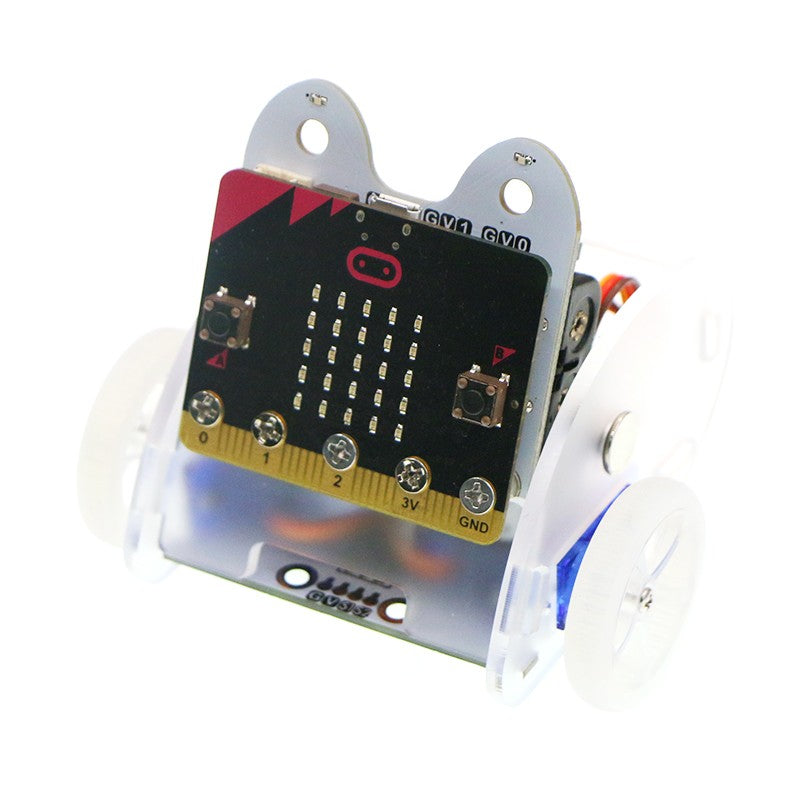
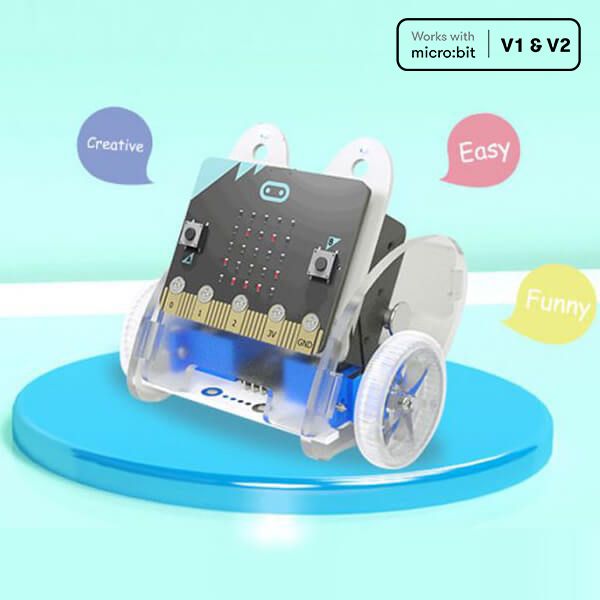
The Ring:bit Car v2 is the gentlest way into micro:bit robotics. Students assemble it in a few minutes, slot in a micro:bit, and have a car they can program to drive a square, follow a light, or glow in rainbow colours. It is small, cheap enough to buy in numbers, and forgiving of mistakes.
What's included:
Ring:bit v2 expansion board, which breaks out three of the micro:bit's GPIO ports
Two 360° continuous rotation servos and a car chassis
Rainbow LED module with eight full-colour LEDs
Assembly guide, with build and code walkthroughs on the ElecFreaks wiki
micro:bit board and batteries are not included — add a micro:bit V2 at checkout
What students practise:
Sequencing: getting a robot to do the right things in the right order
Measuring and adjusting — a square that doesn't close teaches more than one that does
Block coding in MakeCode, with Python sample code available for older students
Simple mechanical assembly and troubleshooting
Expansion modules for line following, obstacle avoidance and drawing are sold separately, so the same car can carry a class from first program to independent project work.
micro:bit Starter Kit + 10 Academy Lessons
$80.00 ex GST
($88.00 inc GST)
The best first step into physical computing. A BBC micro:bit V2 arrives in the post, and ten self-paced lessons in the Sammat Online Academy take a child from their first flashing LED to a working step counter. No prior coding needed.
What's included:
1 x micro:bit GO pack (V2) — board, battery pack with 2 x AAA batteries and a USB cable
10 self-paced lessons in the Sammat Online Academy, with written guides and video walkthroughs
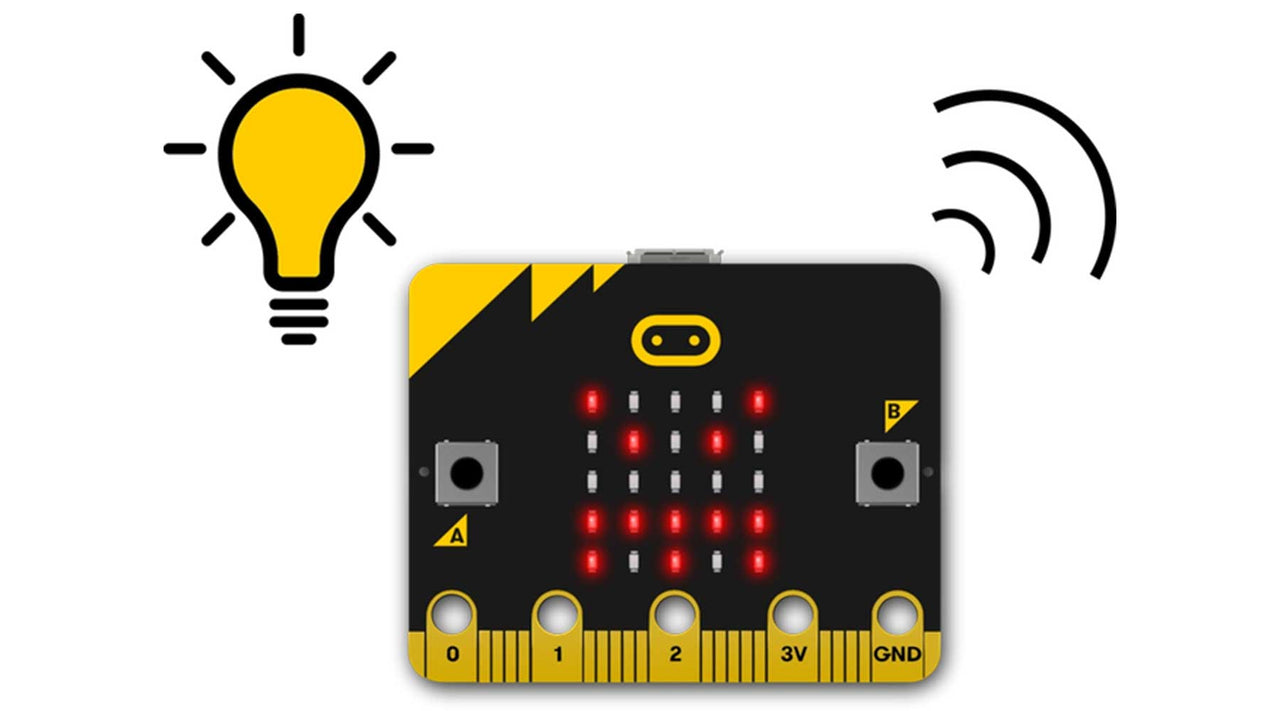
The V2 board adds a built-in microphone and speaker, a touch logo button and a power button
The ten lessons:
LEDs and timing blocks — animate a beating heart with a loop
Text blocks — a scrolling name badge
A and B buttons — flashing happy and sad faces
Sound and the logo button — an emotion badge that makes noise
Shake and tilt — reading the accelerometer
Light sensor — turning the LED display into an input
Dice, and rock paper scissors — two lessons on randomness
Step counter and thermometer — using the built-in sensors
You will need a computer, phone or tablet with internet access to load the Microsoft MakeCode editor. Headphones, crocodile clip leads and conductive materials like foil and paper clips are useful but not required. Work through the lessons at your own pace — there is no timetable and no expiry.
Scratch Coding Course — 5 Online Lessons
$40.00 ex GST
($44.00 inc GST)
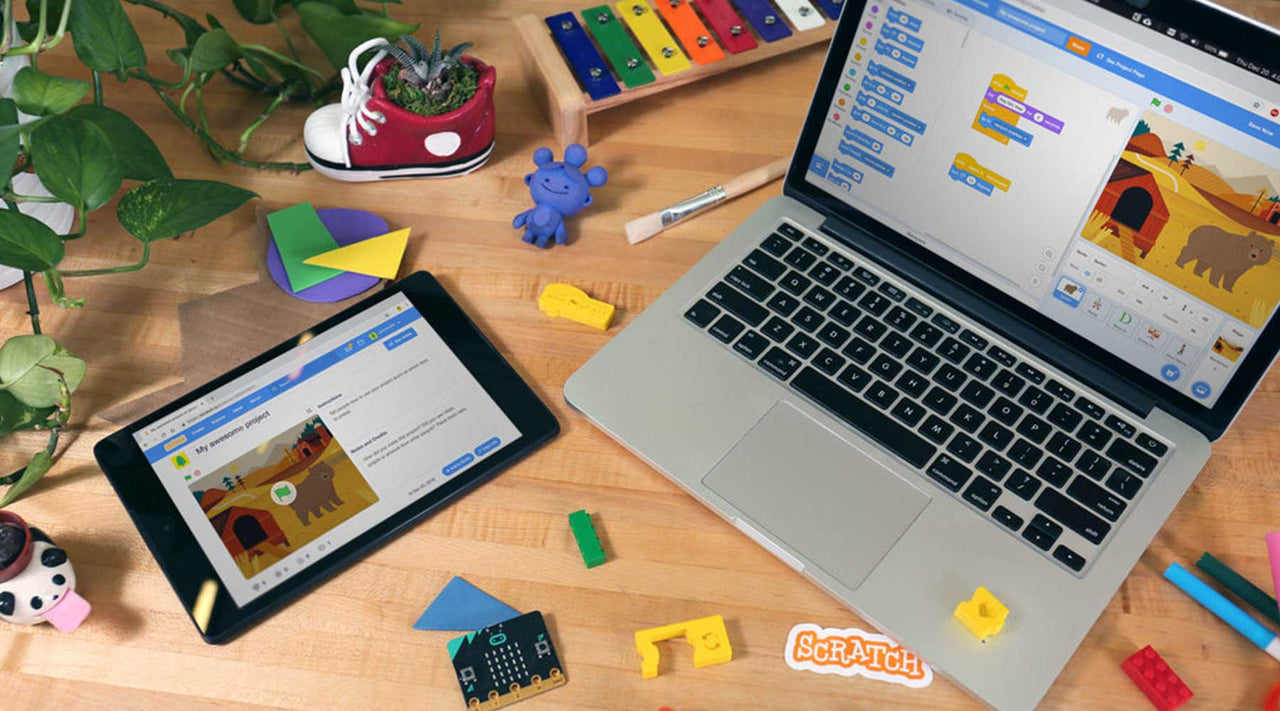
Five self-paced lessons that take a child from opening Scratch for the first time to building five complete games. Scratch is free, runs in a browser, and is designed for ages 8 to 16 — so this course needs nothing but a computer and an internet connection.
What's included:
5 self-paced lessons in the Sammat Online Academy, with written guides and video walkthroughs
No hardware — this is a course, not a kit
What your child builds:
A chase game
A maze game
A pong game
A side-scrolling game
A platformer
What they practise:
Breaking a problem into steps a computer can follow
Loops, conditions and variables, without writing a line of syntax
Testing and fixing a game that doesn't behave as expected
Designing something of their own once the five games are done
You will need a computer with internet access to load the Scratch editor. Work through the lessons at your own pace — there is no timetable and no expiry on a lesson you have not finished.