

KaiBits Large Sensor Pack — 28 Sensors
$198.66 ex GST
($218.53 inc GST)
KaiBits are the sensors that turn a KaiLab coding lesson into a data lesson. Students collect real readings from the room around them — soil moisture, temperature, light — and watch those readings change the virtual world on screen in real time. A digital tree grows as the soil moisture reading rises.
What's included:
1 x KaiBit Large Sensor Pack containing 28 IoT sensors
What students build:
Interactive projects combining sensor inputs with outputs
Automation — code that responds to a condition rather than a button press
Environmental science investigations grounded in their own measurements
What students practise:
Data collection, and the messiness of real readings against clean textbook numbers
Cause and effect between the physical and virtual environments
The IoT concepts underpinning smart buildings, agriculture and environmental monitoring
This is the large pack, matching the sensor set supplied with the KaiLab 12-robot classroom pack. Requires KaiLab robots and the KaiLab platform, sold separately.
KaiBot Autonomous Charging Dock
$69.00 ex GST
($75.90 inc GST)
The Autonomous Charging Dock lets KaiBot look after its own battery. Paired with Kainundrum, the robot drives itself over to the dock and charges when it needs to — no one has to remember to plug it in at the end of a lesson.
What's included:
1 x charging dock
1 x magnetic charge tile
1 x magnetic USB charge cable
How it fits your setup:
The charge tile works alongside standard KaiTiles, so the dock sits inside a maze rather than beside it
Multiple docks can be linked together for a charging row
The magnetic connector means no fiddly plug for small hands to find
This dock is optional — KaiBot also charges from its own USB cable, included with the robot. It earns its place where robots are in constant use and a flat battery costs you a lesson, or where self-charging is itself the thing you want students to see working. Requires a KaiBot robot, sold separately.
KaiBot Charging Case — 10 Robots
$455.00 ex GST
($500.50 inc GST)

The KaiBot Charging Case holds and charges ten robots at once from a single wall socket. It is the answer to the most tedious problem in a classroom robotics set — ten robots, ten cables, and a trolley drawer that never quite gets plugged in before the next lesson.
What's included:
1 x powered charging case (robots not included)
10 x charge docks
10 x USB charge dock cables
1 x multi-port mains USB adapter
Why it earns its place:
All ten robots charge simultaneously, so a set is ready for period one rather than half-flat
Everything travels together — robots, docks and cables stay in one case between rooms
One power point instead of ten, which matters in a classroom with three spare sockets
It pairs naturally with the Medium and Large Classroom Packs, where keeping ten or fifteen robots charged is otherwise a daily job for someone. Robots are not included — this is the case, docks, cables and power supply only.
Lightspeed Flexmike Lanyard (FL)
$23.00 ex GST
($25.30 inc GST)
A genuine replacement adjustable lanyard for the Lightspeed Flexmike teacher microphone. Wear the Flexmike comfortably around the neck and adjust the length to suit — a handy spare if the original has worn out or gone missing.
What it fits
Designed for the Lightspeed Flexmike teacher microphone — both the Access (FMA) and Point-to-Pair (FMN / Flexmike T3) versions.
Specifications
Model / SKU: FL
Type: adjustable neck lanyard
For: Lightspeed Flexmike (FMA and FMN)
Lightspeed Media Connector (MCN)
The Lightspeed Media Connector (MCN) brings all your classroom multimedia into your audio system — wirelessly. Connect it to your main media source, such as a computer or interactive display panel, and it transmits high-quality audio straight to your Lightspeed system, so videos, music and online content play clearly through the same speaker that carries the teacher's voice.
Why add the Media Connector
Multimedia everyone can hear — media audio is distributed evenly across the room, not from a laptop's tinny speaker.
Wireless integration — transmits to your Lightspeed system with no long cable runs across the room.
Connect several sources — up to four 3.5 mm audio inputs, each with volume control, so you can bring in more than one device.
Two-way USB-C audio — links classroom audio with computers for video conferencing and remote learning.
What it works with
Compatible with Lightspeed Access Technology systems — including the Redcat, Topcat, T25 (and 975) and other Point-to-Pair platforms.
Specifications
Model / SKU: MCN
Type: wireless media transceiver
Wireless: Access Technology (1.9 GHz)
Audio inputs: 4 × 3.5 mm stereo, each with volume control
Audio outputs: 2 × 3.5 mm stereo, mixed, with volume control
Digital interface: USB-C 2-way digital audio
Tone control: bass / treble
Pairing: push button, with front-panel link/pair LED
Power: 5 V / 1.0 A via USB-C
Dimensions: 197 × 108 × 32 mm (7.75" × 4.25" × 1.25")
Weight: 209 g (7.36 oz)
Lightspeed Redcat Access Battery Compartment Cover
$26.00 ex GST
($28.60 inc GST)
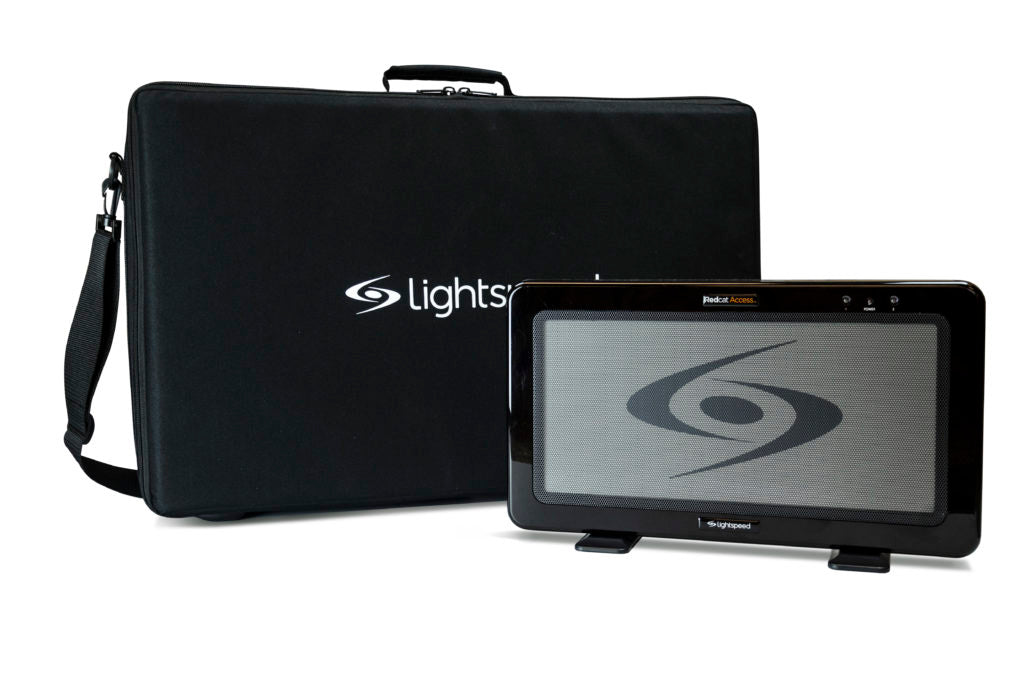
The battery compartment cover for the Lightspeed Redcat Access speaker unit. Redcat Access systems have a door on the back that houses the optional L14V rechargeable battery — this is the cover for that compartment, used to close it neatly and safely whenever the battery is removed.
When you'll need it
Running mains-powered — fit the cover to close the compartment when the battery is out and you're running the Redcat from its power supply.
Replacement — a handy spare if the original cover has been lost or damaged.
What it fits
Designed for the Lightspeed Redcat Access speaker unit (systems purchased from June 2016 onward, which have the removable battery door).
Lightspeed Redcat Soft Carry Case (SCRC)
$275.00 ex GST
($302.50 inc GST)
Take your Redcat anywhere with confidence. This custom-designed soft carry case is shaped to fit the Lightspeed Redcat classroom audio system, with padded protection that keeps it safe as you move it between classrooms or head outside for sport, assemblies and outdoor lessons.
Why you'll want one
Padded protection — purpose-made to fit the Redcat and cushion it from knocks, dust and the weather while you're on the move.
Truly portable — makes the Redcat easy and safe to carry room to room, or out to the oval and back.
Go cordless outdoors — pair it with the optional Redcat rechargeable battery to run your Redcat anywhere, with the case to carry it there.
What it fits
Designed for the Lightspeed Redcat classroom audio system.
Specifications
Model / SKU: SCRC
Type: padded soft carry case
Designed for: Lightspeed Redcat
Lightspeed Redcat Table Stand Feet (RCTS)
$26.00 ex GST
($28.60 inc GST)
Get your Redcat standing steady with a genuine set of Lightspeed Redcat table stand feet (RCTS). These are the feet the Redcat sits on for tabletop and shelf use — a handy replacement set if yours have been lost or worn, or a spare to keep on hand.
Two ways to use them
Tabletop stand — fit the feet to stand the Redcat securely on a table, bench or cabinet.
Wall-mount brackets — the same feet double as wall-mount brackets; pair them with suitable screws and wall anchors to fix the Redcat to a wall.
What it fits
Designed for the Lightspeed Redcat and Redcat Access classroom audio systems.
Specifications
Model / SKU: RCTS
Type: Redcat table stand feet (also usable as wall-mount brackets)
Designed for: Lightspeed Redcat and Redcat Access
micro:bit Interactive Coding Accessories Pack
$61.00 ex GST
($67.10 inc GST)
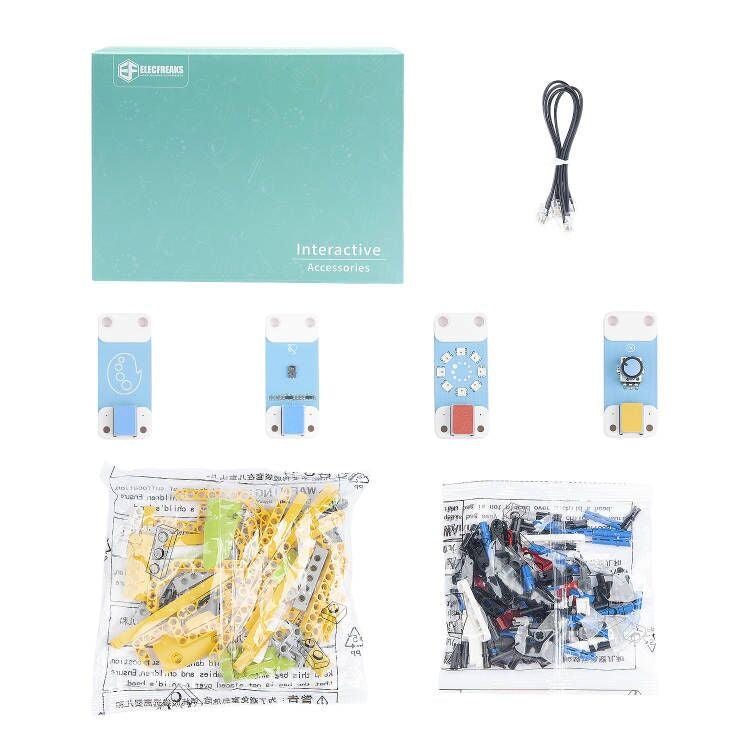
This add-on pack gives an existing Nezha Inventor's Kit or TPBot car a new set of senses. A colour recognition sensor and a gesture sensor let students build projects that respond to what they can see and to a wave of the hand — the point at which coding starts to feel like artificial intelligence rather than switches and timers.
What's included:
Planet X colour recognition sensor
Planet X gesture recognition sensor
Planet X NeoPixel light ring
Planet X trimpot module
Four RJ11 (4P4C) connecting leads
Over 180 building bricks
micro:bit, TPBot car and Nezha board are not included — this pack expands a kit you already own
What students practise:
Working with sensors that classify rather than simply measure
Mapping an input range to an output using the trimpot
Extending a project they have already built, instead of starting over
Block coding in MakeCode with the Planet X extension
Six documented projects on the ElecFreaks wiki introduce the ideas behind machine perception in terms a primary or lower secondary class can follow.