











Description
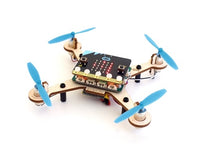
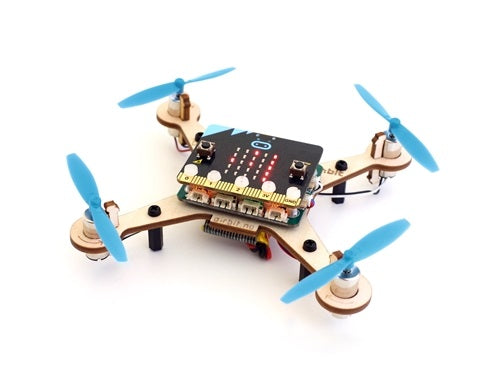
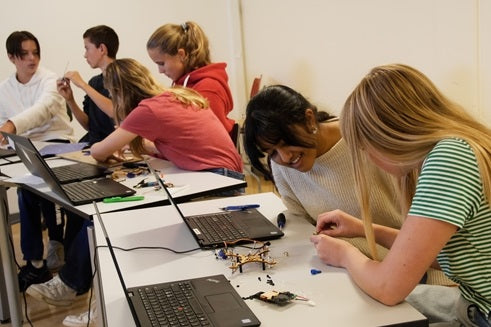
With the MakeKit Air:bit 2 — also written Airbit 2 — students build, code and fly their very own micro:bit drone, turning a coding lesson into a real quadcopter they can put in the air. It's a hands-on way to connect the code on screen to real motors, sensors and flight.
What's included and how it works:
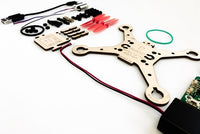
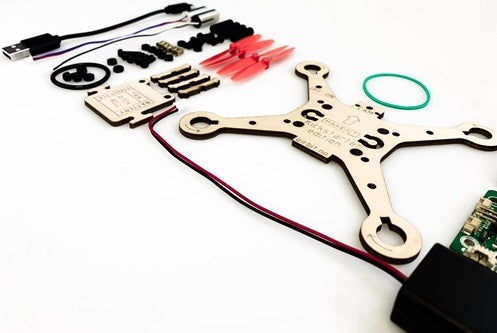
- A programmable micro:bit drone (quadcopter) construction kit — assemble the laser-cut frame, connect the electronics, then code it to fly
- WonderKit Start Pack flight-control board with repairable birch plywood parts, designed and partly made in Norway
- Code in Microsoft MakeCode, JavaScript or Python, from beginner blocks to advanced flight algorithms
- Expandable — the same control board can later be rebuilt into the Hover:bit hovercraft, and you can 3D-print your own frames
- Suitable from around age 11 (upper primary and secondary)
- Please note: BBC micro:bits are not included. Two are recommended per drone — one in the drone and one as the remote control, and at least one of the pair must be a micro:bit V2. You can also fly it with a single micro:bit using the free iPad or Android app
What your students practise:
- Coding and computational thinking across three real programming languages
- Electronics, motors and the aerodynamics of how a quadcopter flies
- Battery technology, problem-solving and design
The learning program was developed with schools and science centres in Norway, and every part is repairable — so the Air:bit 2 is built for the knocks of a busy classroom, not a single term.
 Next Product


