


micro:bit motor:bit Smart Car Kit
$50.00 ex GST
$73.77 ex GST ($55.00 inc GST)
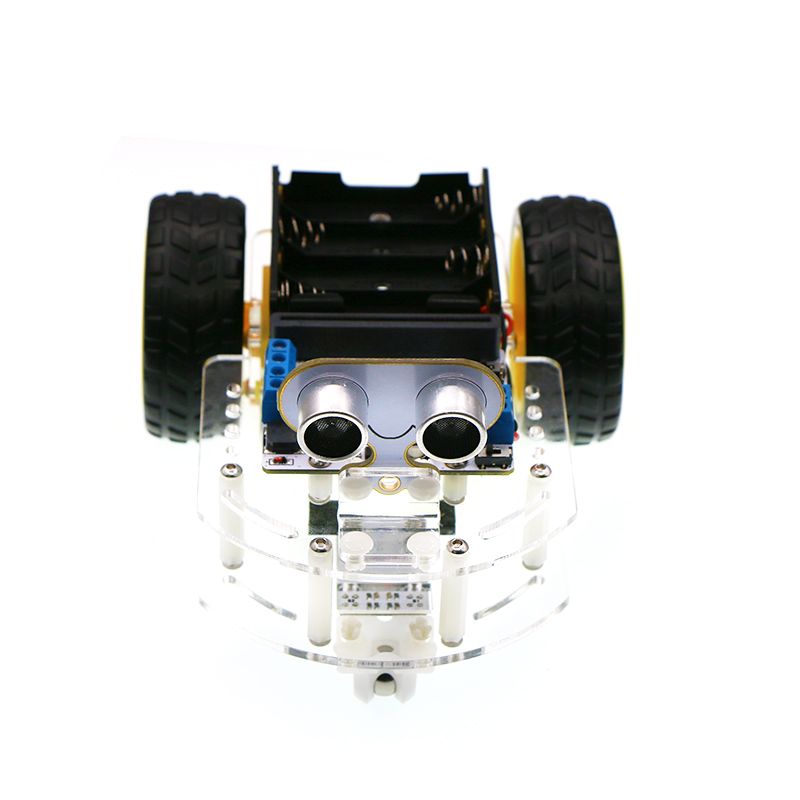
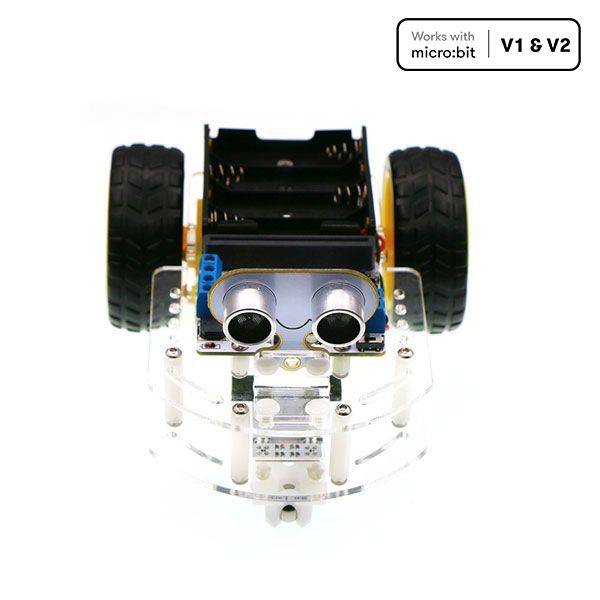
The motor:bit Smart Car Kit is a two-wheel robot students build themselves, then teach to see. With an ultrasonic sensor at the front and two line-tracking modules underneath, it can park at a fixed distance, hold its position behind a moving obstacle, or follow a taped line around the classroom floor.
What's included:
motor:bit driver board with a TB6612 chip, 12 GVS ports and an I2C port
sonar:bit ultrasonic distance sensor
Two line-tracking modules
Acrylic chassis and assembly hardware
micro:bit board and batteries are not included — add a micro:bit V2 at checkout
What students practise:
Using sensor input to make a decision, rather than just running a fixed sequence
Threshold thinking — deciding what counts as "too close" or "off the line"
Building and wiring a working machine from parts
Debugging behaviour they can watch happen
Six documented projects on the ElecFreaks wiki take a class from fixed parking through line tracking to Bluetooth remote control, so the same car supports several lessons rather than one.
micro:bit Smart Cutebot — ElecFreaks Robot
$57.00 ex GST
($62.70 inc GST)
Cutebot is the micro:bit robot car most people picture when they think of one. It is small, quick and almost entirely pre-assembled — only the batteries and the ultrasonic sensor need fitting, so a class can be driving within minutes of opening the box rather than at the end of the lesson.
What's included:
Cutebot rear-drive car with dual N20 high-speed motors
HC-SR04+ ultrasonic distance sensor
Large line-following map and user guide
Two RGB LED headlights, two NeoPixel rainbow lights and underbody clearance lamps
Two line-tracking probes, a buzzer horn and an infrared receiver
Runs on 3 x AAA batteries, not included
micro:bit board is not included — add a micro:bit V2 at checkout
What students practise:
Sequencing and speed control — the difference between full speed and gradual
Line following and obstacle avoidance using sensor thresholds
Block coding in MakeCode, progressing to Python, JavaScript or C++
Measuring, adjusting and testing rather than guessing
The arc-shaped shell takes knocks well and the motors are fully enclosed against dust, which matters for a robot that spends its life on classroom floors. A 3-pin port allows sensor expansion, and the body accepts standard building bricks. Measures 85 x 85 x 38 mm.