




Last Updated: November 10, 2026
Quick Summary
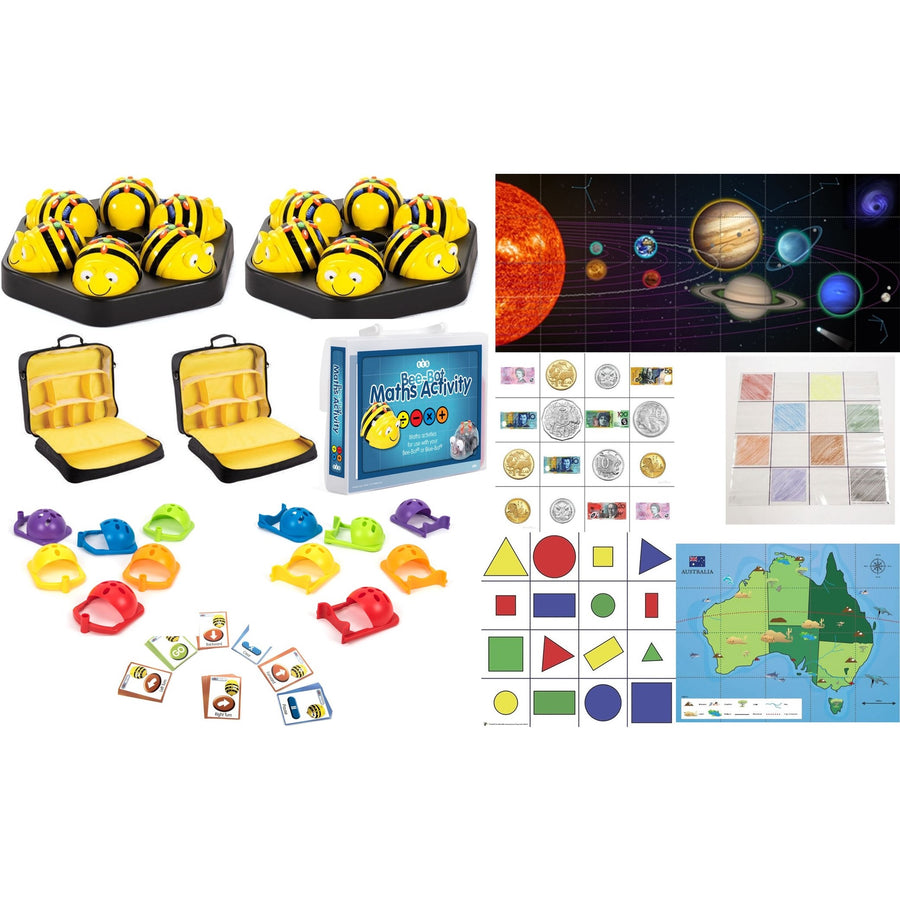
The best steam kits for early learning centres are purpose-built, screen-free kits that suit your group size. Bee-Bot kits suit preschool makerspaces, with the Value Class Kit holding 12 robots and the Mobile Learning Kit six robots in one case. For a small group on a tight budget, the Sphero indi Student Kit lists at $244.55.
- Bee-Bot Value Class Kit holds 12 robots, suiting whole-class rotations.
- Bee-Bot Bundle Mobile Learning Kit gives six robots in one carry case.
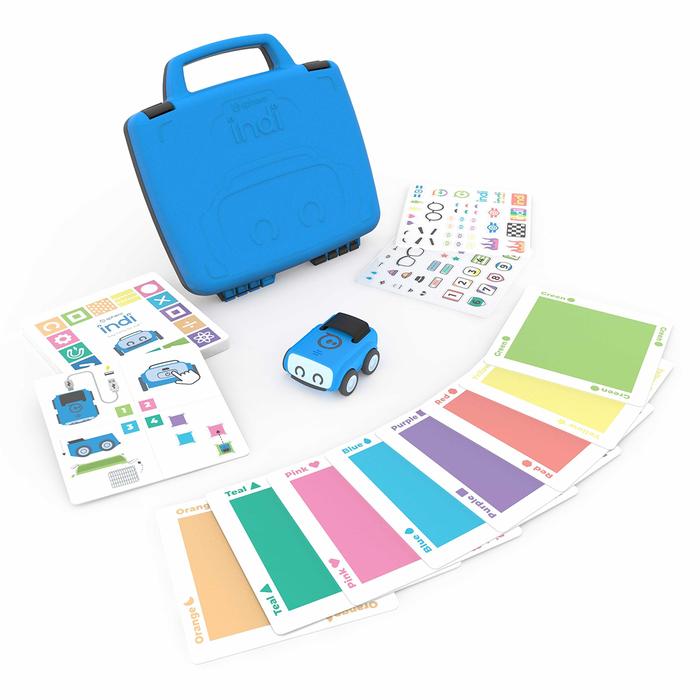
- Sphero indi Educational Robot Student Kit lists at $244.55 for one to three students.
- Check how many children will share each robot before buying.
- Start with one robot and one mat for the first two weeks.
Table of Contents
- Why Early Learning Centres Need Purpose-Built STEAM Kits
- Quick Comparison of Sammat's STEAM Kits
- How We Evaluated These Kits for Early Learners
- Best Robotics Kits for Preschool Makerspaces
- Choosing Kits Based on Group Size and Class Quantities
- EYLF-Aligned STEAM Activities Using Your Kits
- Age Suitability, Safety and Supervision
- How to Set Up a Preschool Makerspace
- Choosing Your First Kit for Next Term
- Frequently Asked Questions
Why Early Learning Centres Need Purpose-Built STEAM Kits
Choosing the best steam kits for early learning centres starts with one question: will the kit still work when twenty four-year-olds share it on a Tuesday morning? Sammat builds its range around that test. Sammat's products are curated by former teachers, who judge them on classroom use.
Early childhood programmes have a clear case for hands-on STEAM. Children learn sequencing, direction and problem-solving by doing, and screen-free kits keep that learning physical. The practical question is which kit suits your group size, your room and your budget.
Quick Comparison of Sammat's STEAM Kits
Quick Picks:
- Best for a whole room: Bee-Bot Value Class Kit, with 12 robots
- Best for a mobile set: Bee-Bot Bundle - Mobile Learning Kit, six robots in one carry case
- Best budget entry: Sphero indi Educational Robot Student Kit, for one to three students
| Kit | Starting Price | Robots or Core Items | Best For |
|---|---|---|---|
| Bee-Bot Value Class Kit | $1,999.09 | 12 Bee-Bot robots | Whole-class rotations |
| Bee-Bot Swarm 6-Pack + Docking Station | $771.82 | 6 Bee-Bot robots | Small groups |
| Bee-Bot Bundle - Mobile Learning Kit | $944.55 | 6 Bee-Bot robots, carry case | Sharing between rooms |
| Ex-Demo Sphero indi Class Pack | $1,450.00 | 8 indi robots | Screenless coding, group use |
| Sphero indi Educational Robot Student Kit | $244.55 | 1 indi robot | Trial or small group |
Starting Price
Prices are in AUD and are the listed prices for Sammat's products at the time of writing.
How We Evaluated These Kits for Early Learners
We also looked at what is in the box. A kit that ships with mats, cards and pushers saves a centre from sourcing extras. A kit that needs a separate robot before anything works is a different purchase, and we say so below.
Best Robotics Kits for Preschool Makerspaces
Bee-Bot floor robots suit preschool makerspaces well because children programme them with simple button presses. The Bee-Bot Swarm 6-Pack + Docking Station gives a small group six rechargeable robots and one docking station, so batteries never need replacing. It is a sensible starting point for a single room.
The Sphero indi Code Mat & Literacy Cards add a literacy angle. The mat is double-sided, with a literacy side and a blank coding grid, and it is sold separately from the robot.
The Sphero indi Educational Robot Student Kit is designed to engage one to three students at a time.
Choosing Kits Based on Group Size and Class Quantities
Quantity is where most centres get caught out. A Bee-Bot Value Class Kit holds 12 robots, which suits a whole class working in rotations. The Bee-Bot Swarm holds six, which suits a small group. Check how many children will share each robot before you buy.
For the Sphero indi range, the Ex-Demo Class Pack holds eight robots with a charging case for all of them. The mats and pushers are separate purchases in several kits, so add them to your count.
EYLF-Aligned STEAM Activities Using Your Kits
The Early Years Learning Framework emphasises play, exploration and communication. The Literacy and Numeracy Kit for Bee-Bot and Blue-Bot lines up with that approach. Its alphabet, CVC and number line mats let children connect early coding with letters, sounds and counting.
The Nature and Environments Kit suits outdoor-themed units, using countryside, farmyard and zoo mats. Children plan routes across each mat, which builds sequencing while they talk about animals and habitats. Check your centre's own programme documents before you plan how each mat fits a unit.
Age Suitability, Safety and Supervision
For an early learning centre, safety is rarely a question of whether a kit is suitable in principle. It is a question of how the kit behaves in a room with children of different ages, abilities and habits. Before buying, check the age guidance printed on each product listing and compare it against the youngest child who will use the kit. Where a listing gives a minimum age, treat it as the floor for supervised use rather than a signal that older children can be left to explore freely.
Mixed-age groups deserve particular attention. A kit pitched at four-year-olds will often be handled by two-year-olds who mouth objects, pull cables or tip robots off mats. Plan the room so that the youngest children are seated with an educator, and keep the more delicate or small-piece components, such as silicone tiles and charging leads, in closed storage between sessions.
Small parts and cables are the most common hazards. Silicone tiles, pushers and charging leads can be swallowed or tangled, so inspect each kit at the start and end of every session and remove any damaged pieces from use. Store chargers on a high shelf or in a locked cupboard, and never leave a robot charging unattended in a room where children are playing.
Supervision works best when adults plan the activity and then step back. Set up routes, model directional language such as forward, back, left and right, and let children take over the planning. A common pattern in well-run rooms is one educator for each small group of children working on a single robot, with a second adult free to manage the rest of the room. Once children can plan routes together, adding magnetic building pieces can extend the same collaborative problem-solving into imaginative construction, as explored through Project Montessori.
Document your centre's supervision rules and storage routine in writing, and share them with every educator who will use the kits. Sammat's teacher-run support team is available for questions, but the final safety decisions remain with your own service's policies.
How to Set Up a Preschool Makerspace
A makerspace in an early learning centre succeeds or fails on routine rather than on equipment. Children need to know where the kits live, how to take them out, and what happens when a session ends. Build that predictability into the room before you add a second or third kit.
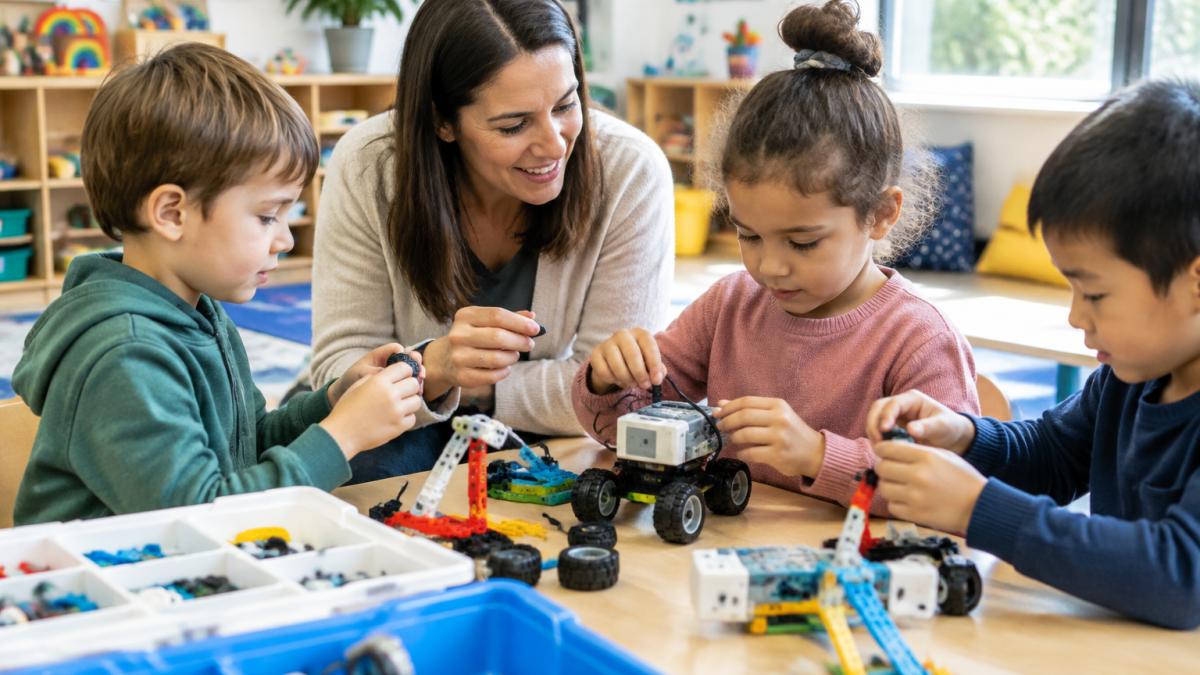
Start with one robot and one mat for the first two weeks. This gives educators time to learn the commands, notice where children get stuck and adjust the challenge. Once the routine is steady, add a second set. Expanding too quickly is a common mistake, because more robots without a clear turn-taking plan simply means more children waiting and fewer children learning.
Group size matters more than most centres expect. Pairs work well for a single robot, because each child can plan a route while the other child presses the buttons. Small groups of three or four suit a larger mat, with each child responsible for one segment of the route. Whole-class rotations work when each group has a fixed time slot, usually short enough to keep attention, and a visual timer makes transitions smoother.
Setup time is worth budgeting honestly. Laying out a mat, placing the robot at its start point and checking that the battery is charged can take several minutes, so plan these steps before children arrive rather than during the activity. Keep a labelled tray for each kit that holds the robot, its mat, cards and pushers, so an educator can prepare a session in a few minutes.
Layout matters too. Low tables give children a comfortable working height, and clear floor space allows mats to be laid out without stepping over them. Place the charging station away from the main traffic path and out of reach of the youngest children. Where space is tight, a mat rolled up and stored on a shelf keeps the room usable for other activities.
Finally, decide in advance how the kits fit your daily timetable, whether as a planned group time, a choice during free play or a unit linked to a theme. Children settle into a makerspace quickly when they can predict when it happens and what they are expected to do.
Choosing Your First Kit for Next Term
If you are sharing widely, the Bee-Bot Bundle - Mobile Learning Kit gives you six robots in one carry case. If your group is small and your budget is tight, start with the Sphero indi Educational Robot Student Kit at $244.55 and expand from there. If you need a whole class, the Bee-Bot Value Class Kit holds 12 robots.
Our recommendation is to pick the kit that matches your largest group, then add mats for the themes you already teach. Shop the full STEAM range at Sammat to compare what fits your room.
Frequently Asked Questions
What are the best STEAM resources for children aged 0-8 years?
Floor robots such as the Bee-Bot Swarm 6-Pack + Docking Station (from $771.82) suit sequencing and directional language. Choose kits by developmental stage: younger children benefit from physical, tangible tasks, and older preschoolers can handle mazes, simple programmeming and themed mats. Check each kit's listing for its recommended age range before buying, and ask the Sammat support team which kit fits your group.
How do I choose age-appropriate robotics kits for preschool makerspaces?
Start with the children's fine motor skills and attention span. Floor robots with large, simple buttons, such as the Bee-Bot range, let children programmeme routes with a few presses. Screenless kits like the Sphero indi Student Kit use colour tiles that children can arrange by hand. Consider the number of children per kit as well: a six-robot set suits small rotating groups, while a 12-robot Bee-Bot Value Class Kit ($1,999.09) suits a whole room working at once.
Are STEAM kits aligned with the Early Years Learning Framework (EYLF)?
Many of Sammat's kits include activities that support problem-solving, communication and early literacy and numeracy. The Literacy and Numeracy Kit for Bee-Bot and Blue-Bot ($408.18), for example, combines letters, numbers and Australian money with early coding. Educators should map each activity to the EYLF learning outcomes their centre uses, as the kits support those outcomes but do not replace your own planning.
What are the benefits of introducing STEAM in early childhood education?
Hands-on STEAM activities encourage children to predict outcomes, test ideas, correct mistakes and work together. Floor robots build sequencing and directional language, while mats and cards connect coding to counting, geography and science. Because many kits are screen-free, they also give children active, physical learning rather than screen time.
